
Sempervivum grandiflorum
- PNGP
- Endemism
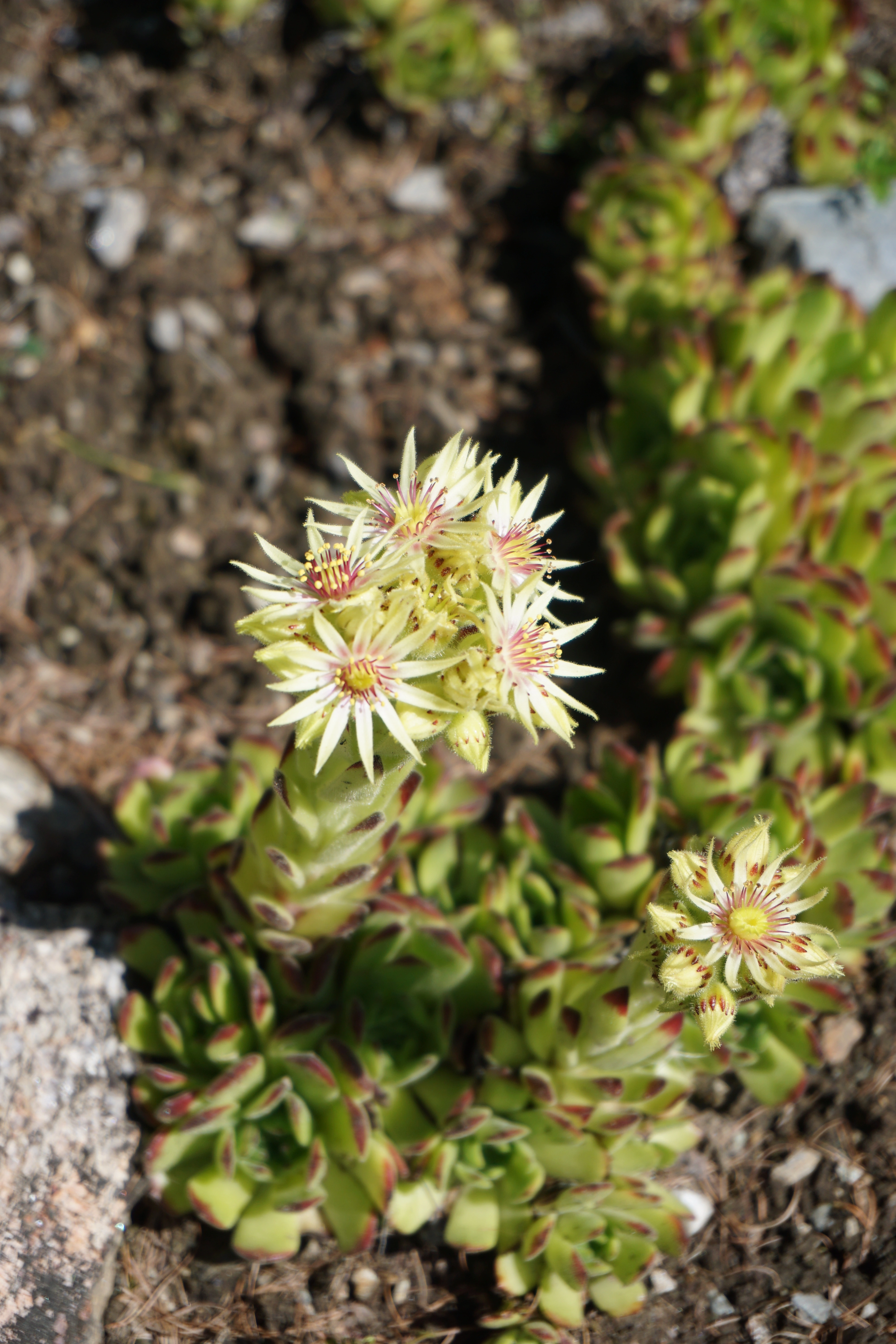
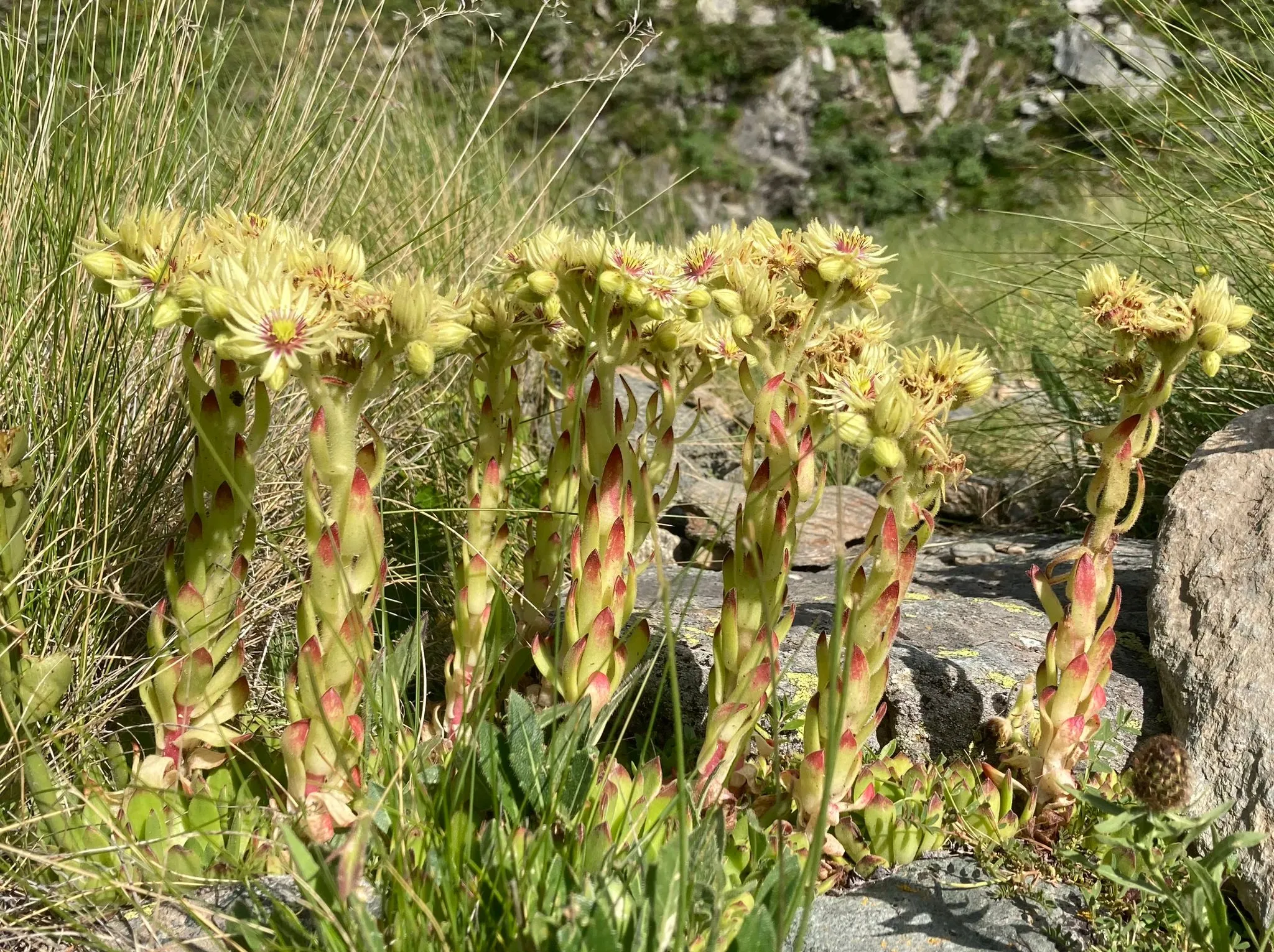
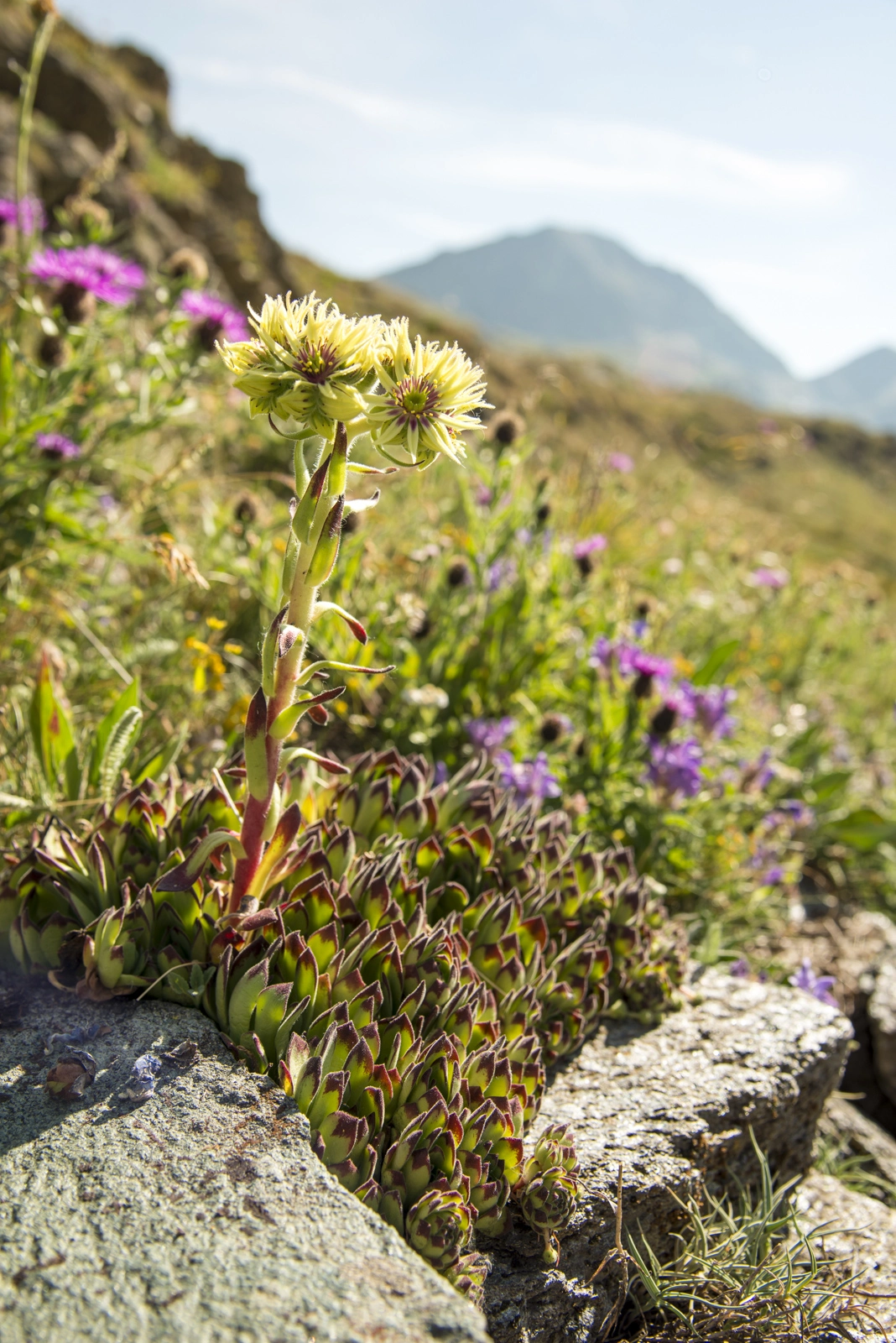
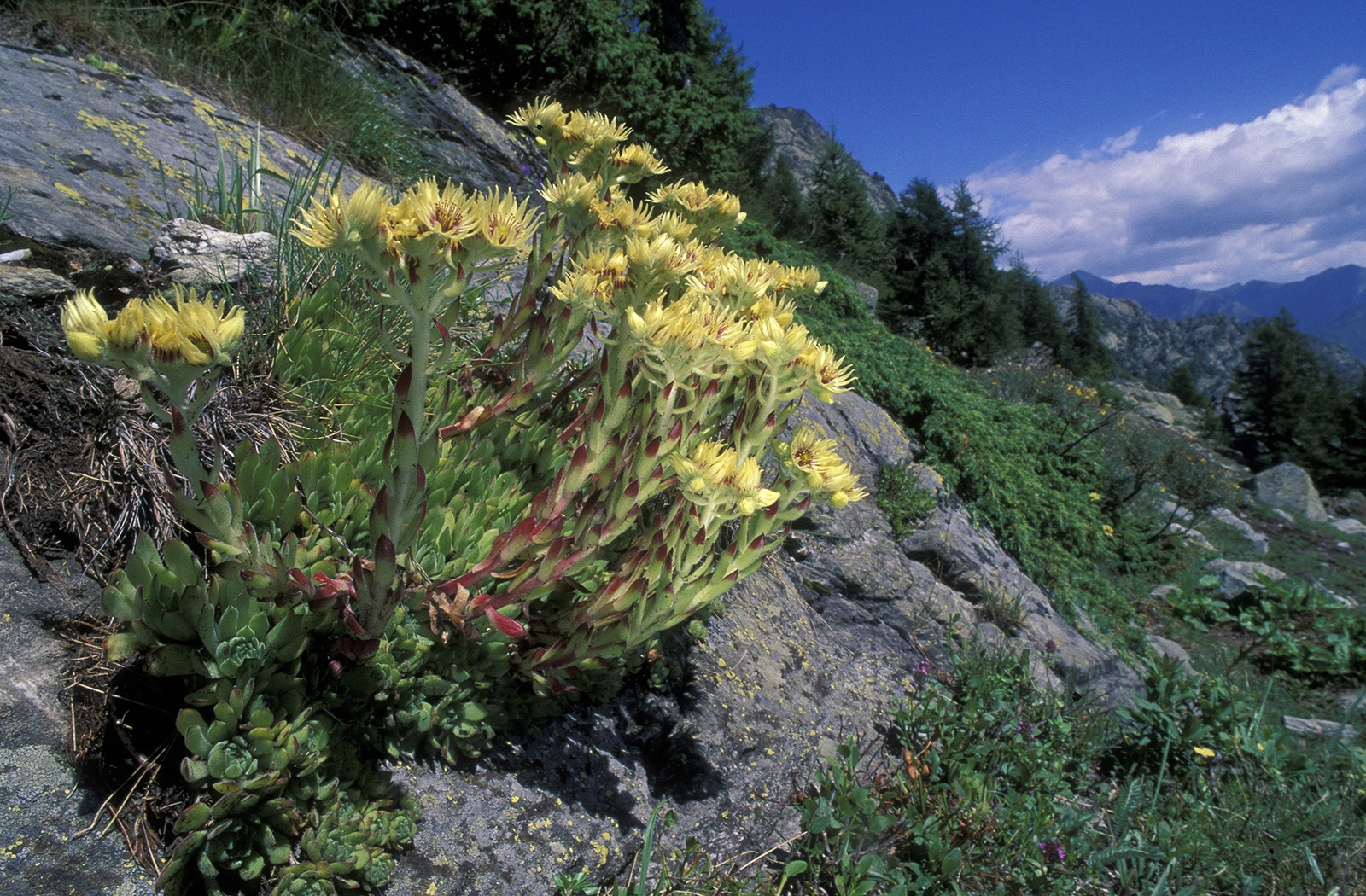
The large-flowered houseleek is a species endemic to a small area of the Western Alps, which also includes Piedmont and the Aosta Valley. It is often found on cliffs, stony grasslands and dry stone walls at altitudes ranging from 1,000 to 2,600 metres. A rather rare plant in the Alps, it is listed on the National IUCN Red List.
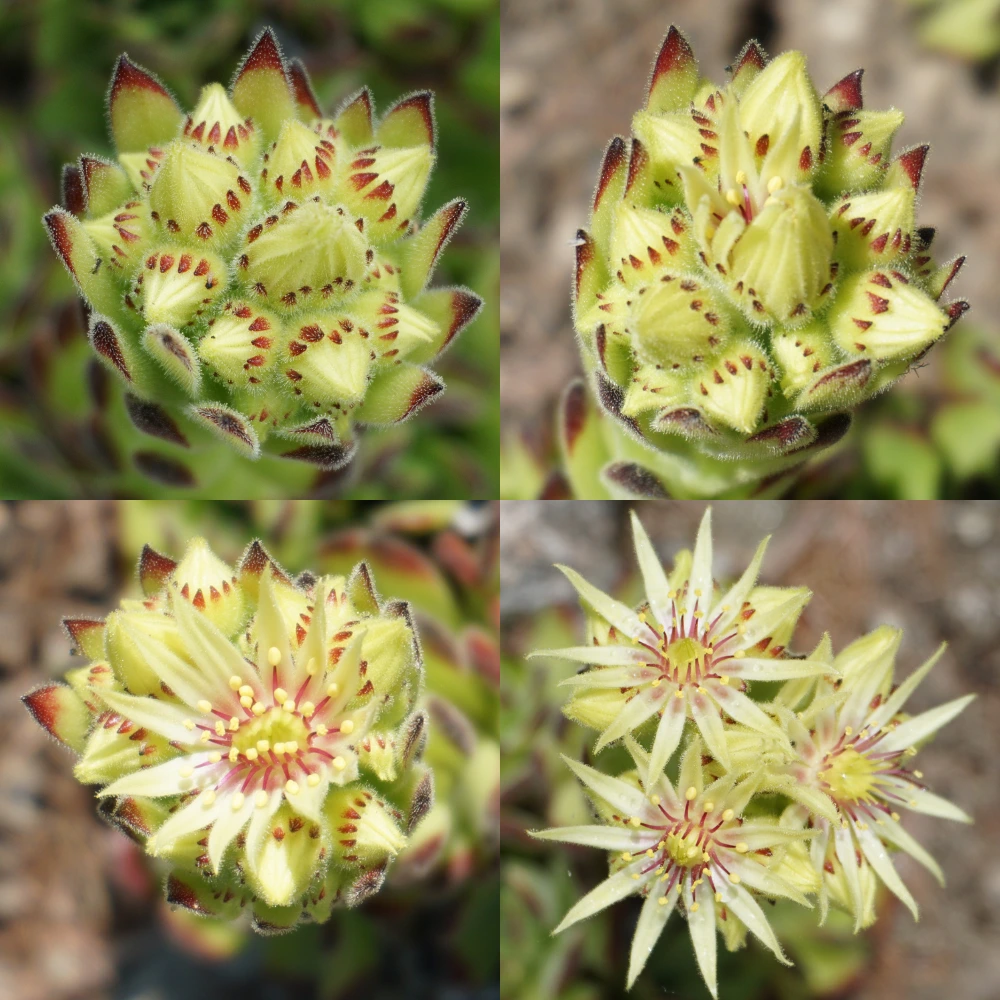
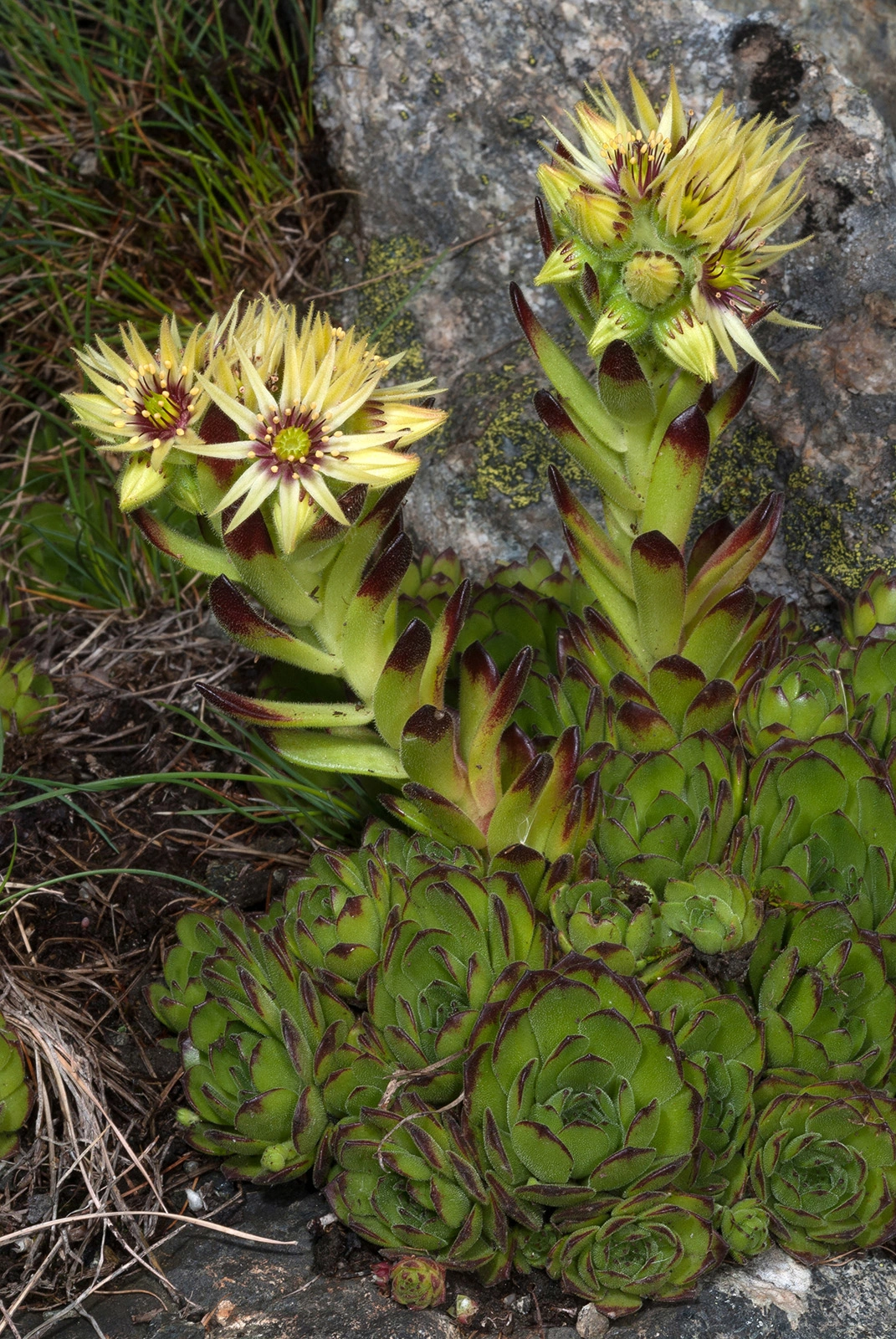
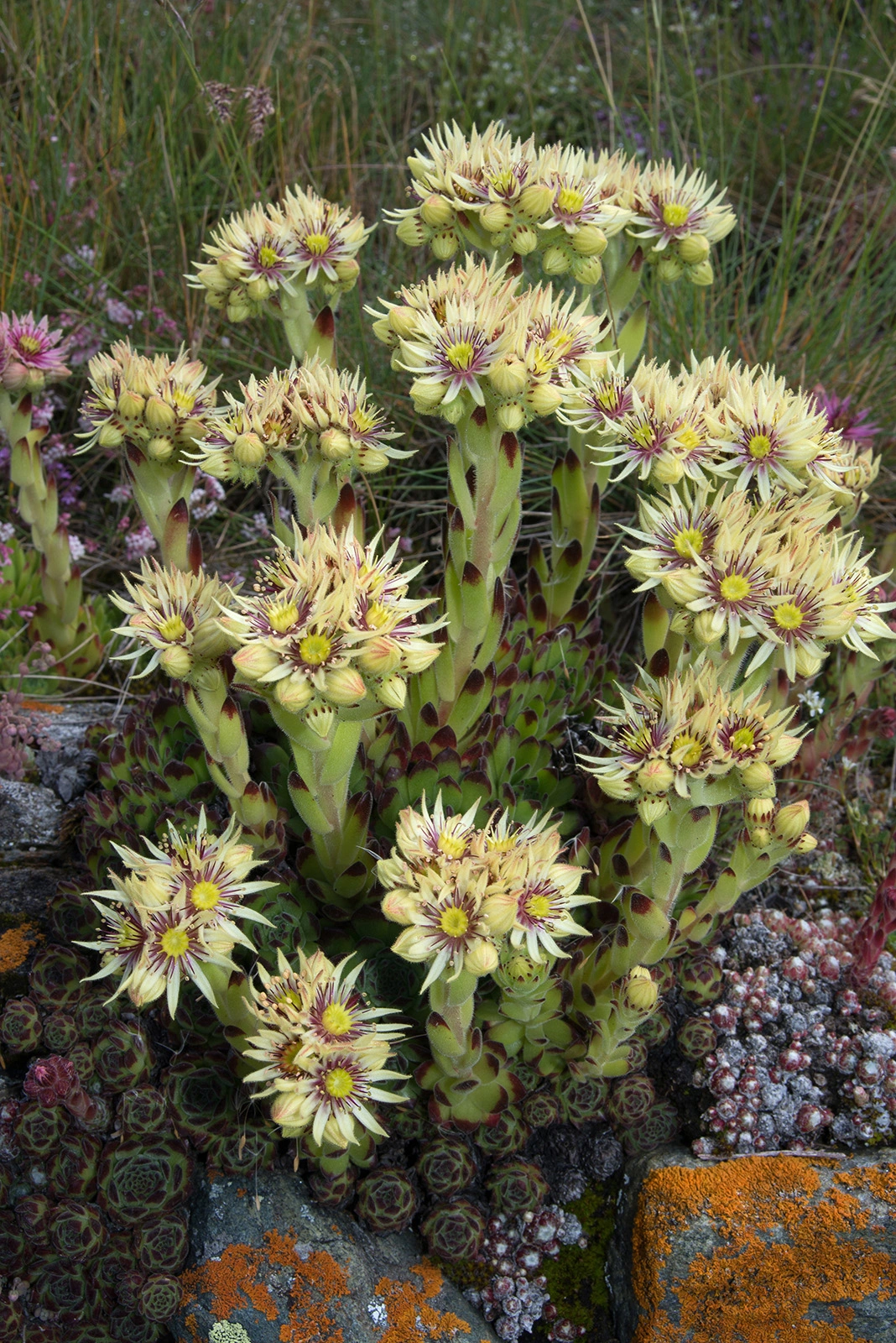
The species has fleshy, pointed basal leaves that are purple-red at the tip, arranged in a rosette. From July through to September, flowering stems emerge from the basal rosettes, bearing a star-shaped yellow inflorescence. The plant is sticky due to the glandular hairs that cover it, giving it a characteristic resinous, intense and unpleasant odour.
It is a so called succulent plant; that is, it is a plant that, in order to adapt to arid climates, has developed specialised tissues for the accumulation and storage of water. Furthermore, the Sempervivum genus has adapted to survive for many months under the snow, managing to protect its leaves (and its water reserves) from freezing. Given its hardiness, it is often used as an ornamental plant.