
Leontopodium alpinum
 See on the map
Listen to audio
See on the map
Listen to audio
- PNGP
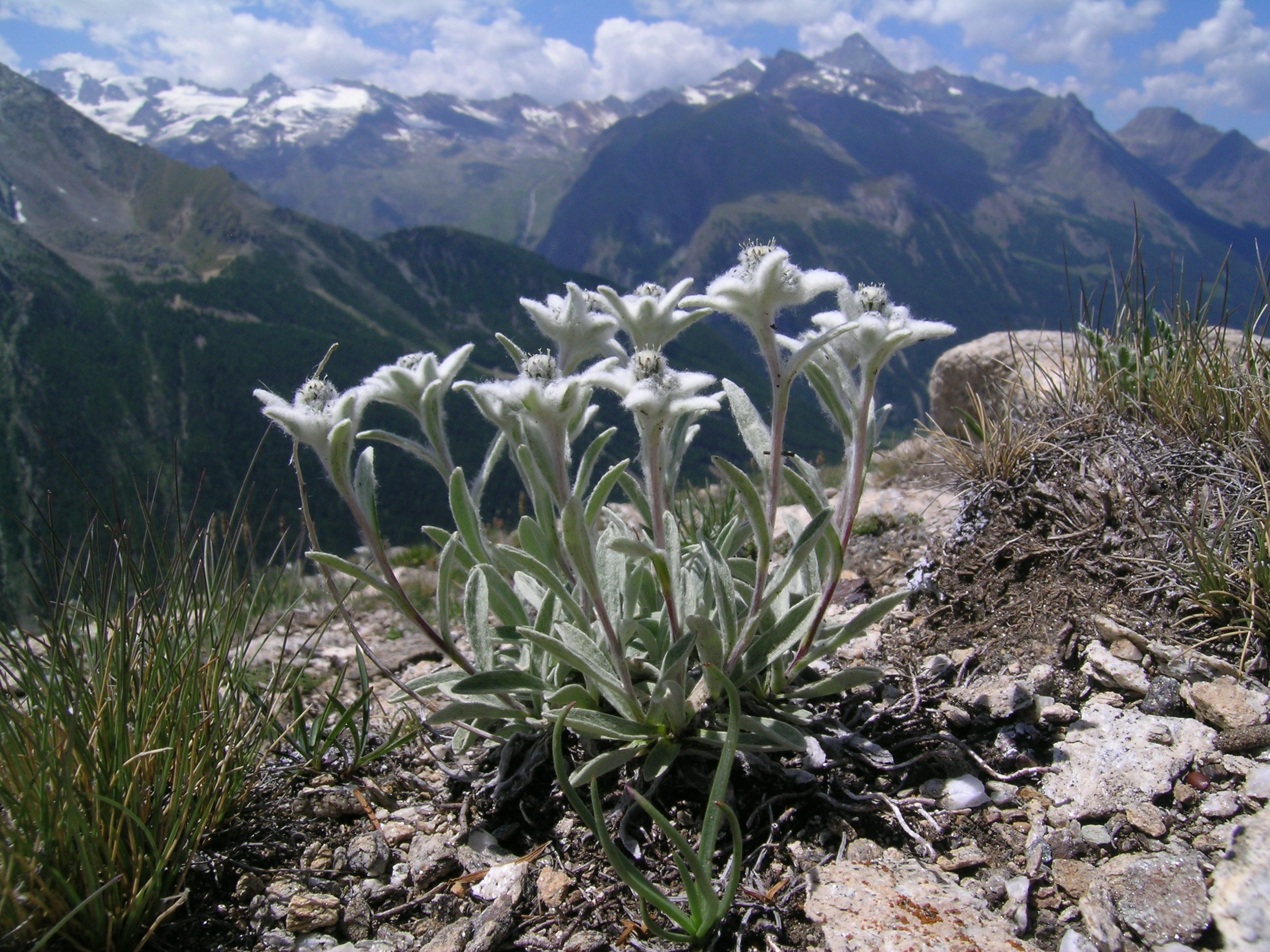
The edelweiss is undoubtedly the plant that symbolises the Alps. Having been the subject of indiscriminate picking for a long time, to the extent that it came to be considered an endangered species in some parts of the Alps, it is now a protected species at national level. Although it is the plant that symbolises the Alps, it is native to the warm, arid mountainous regions of Central Asia, where the genus Leontopodium exhibits the greatest diversity. The edelweiss spread across Europe during the last ice ages and is a relict of the pre-glacial alpine flora.
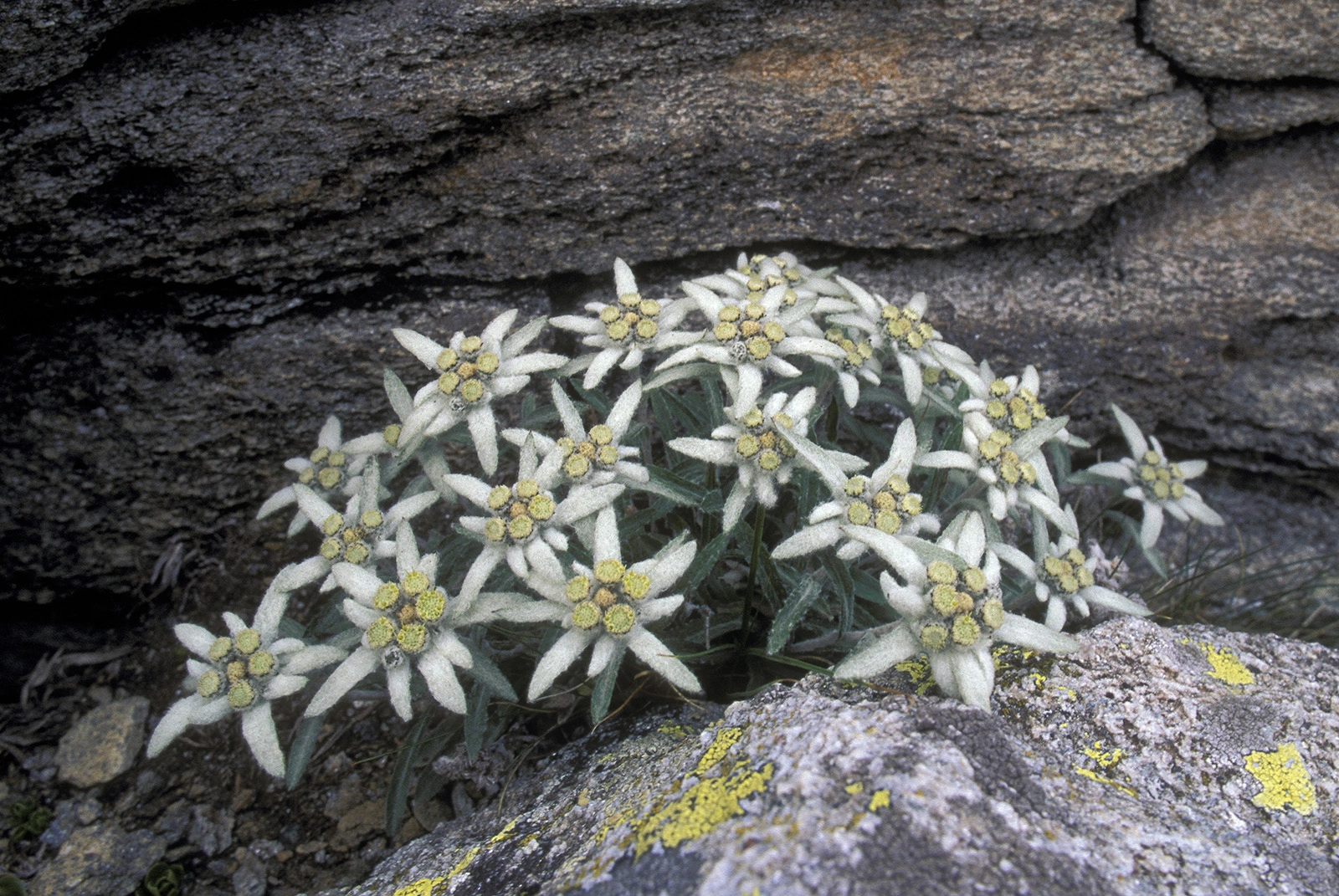
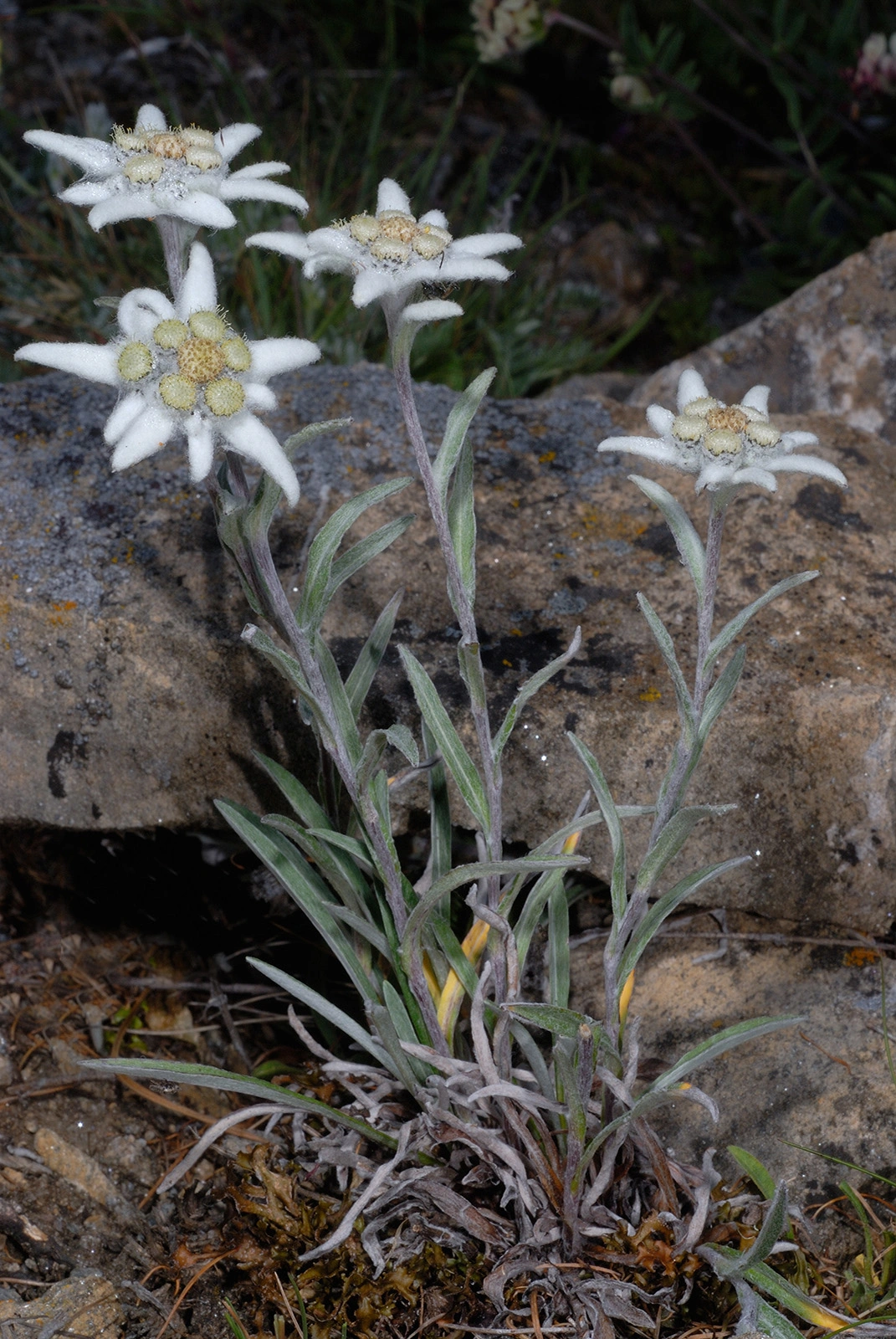
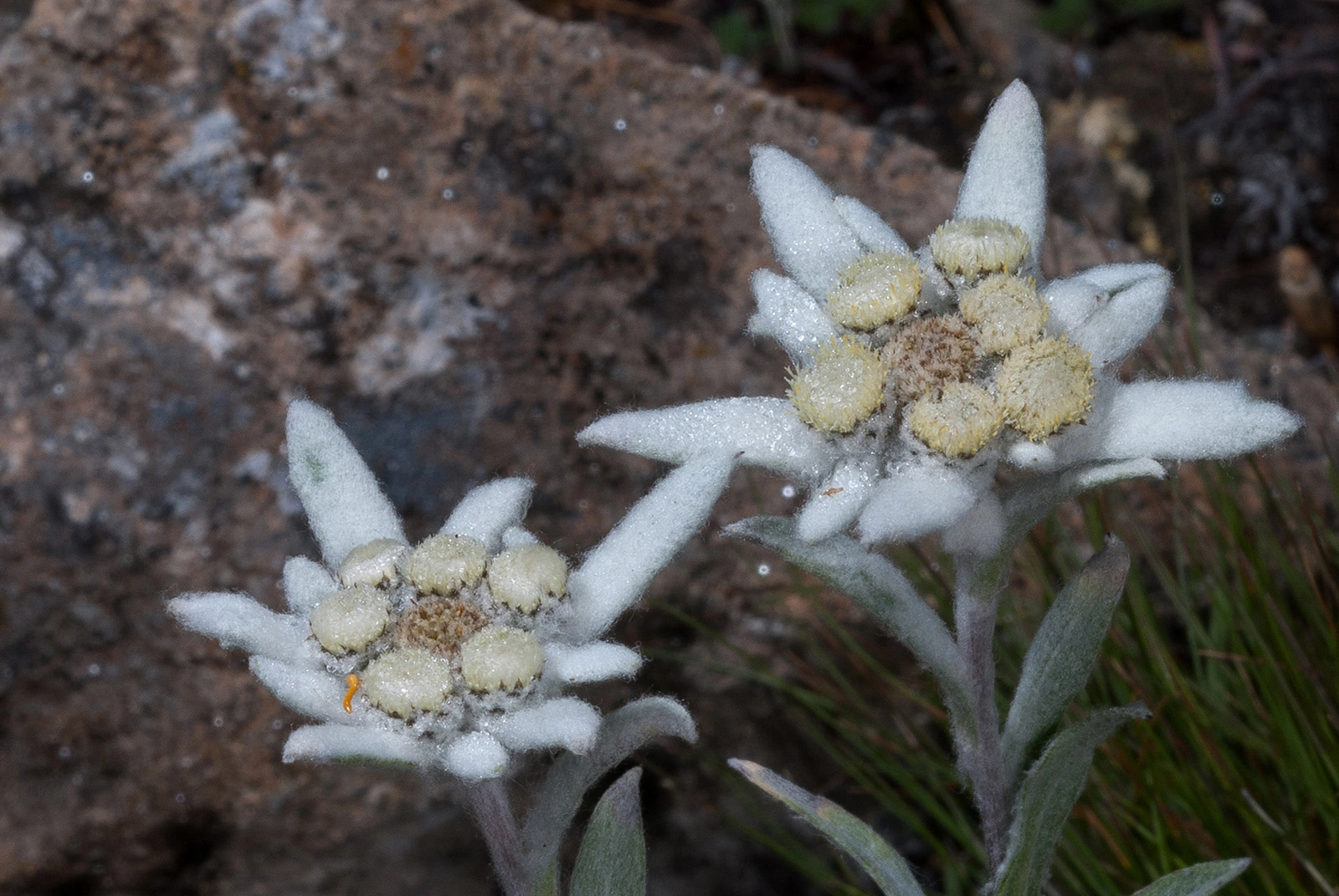
The edelweiss’s habitat consists of alpine and subalpine grasslands, as well as rocky slopes and scree, mainly on limestone substrates. A characteristic feature of the species is the dense down covering it, giving it a white, tomentose appearance throughout. The inflorescence consists of numerous flower heads comprising only tubular flowers, grouped into glomerules surrounded at the base by 5–15 bract-like leaves arranged in a star shape, which give the plant its common name.
The genus name derives from the Greek lèon (lion) and podium (small foot), alluding to the fact that the shape of the inflorescences resembles the print of a lion’s paw; it is a plant with medicinal properties and is also used in the cosmetics industry.