
Cortusa matthioli
 See on the map
Listen to audio
See on the map
Listen to audio
- PNGP
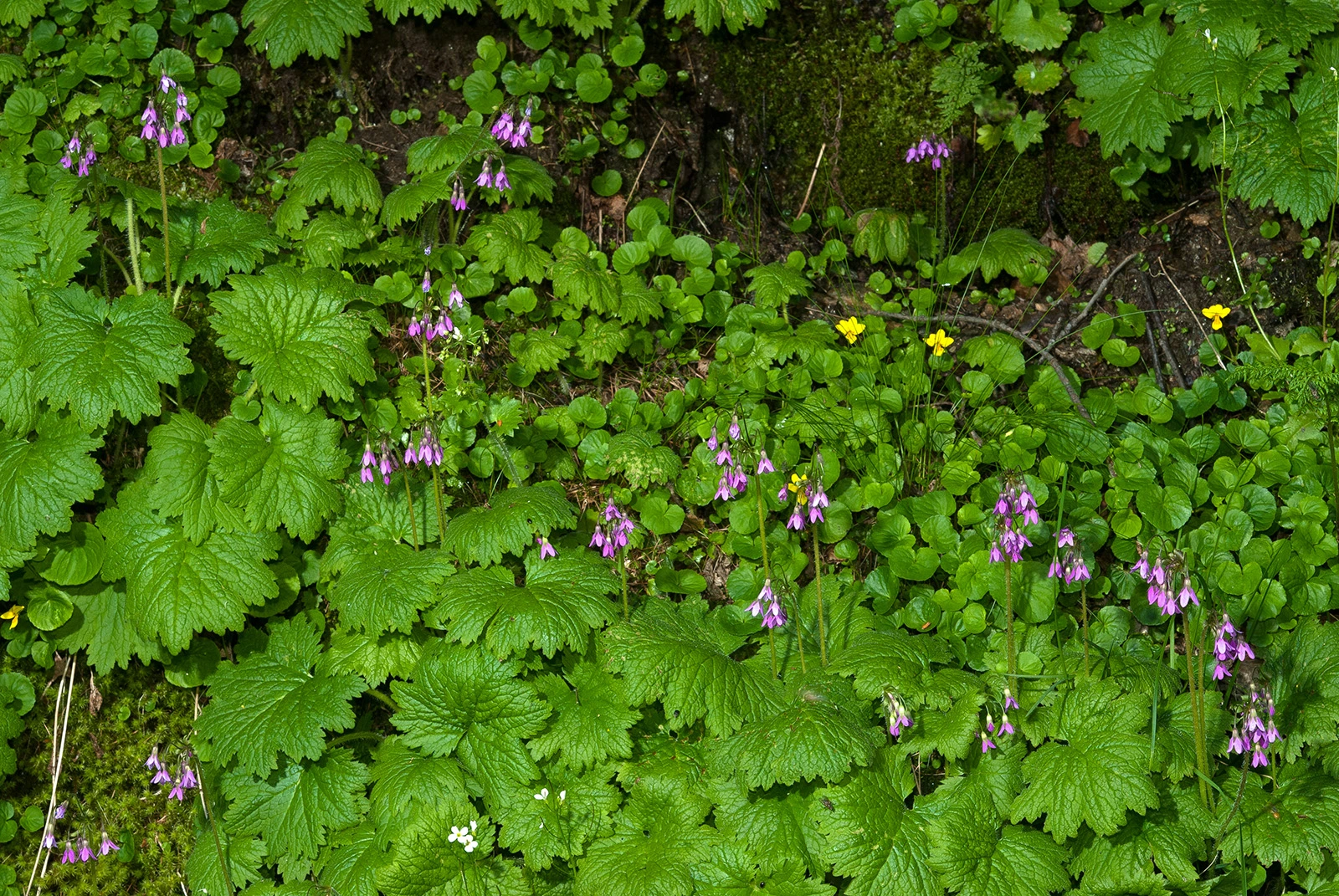
A species of remarkable beauty and extremely rare in the Alps: it is found only in the Aosta Valley, Piedmont, Veneto and Trentino-Alto Adige. It is a Tertiary relict, that is, a species of ancient origin which, in the Alps, survived the ice ages in refuge sites situated on the edges of the mountain range. It can be found in cool and relatively damp habitats, such as green alder thickets, at altitudes ranging from around 1,660 to 2,200 metres.
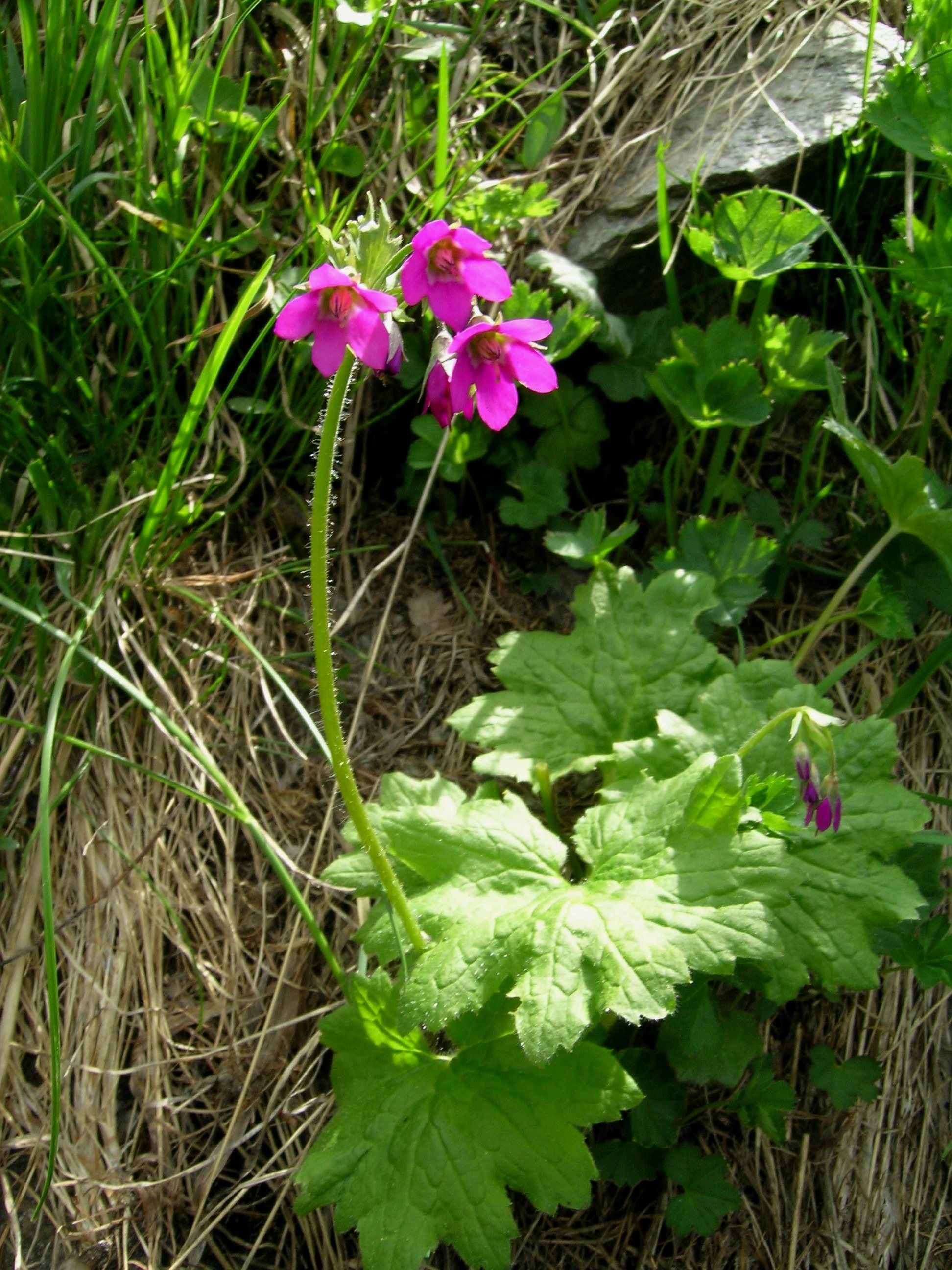
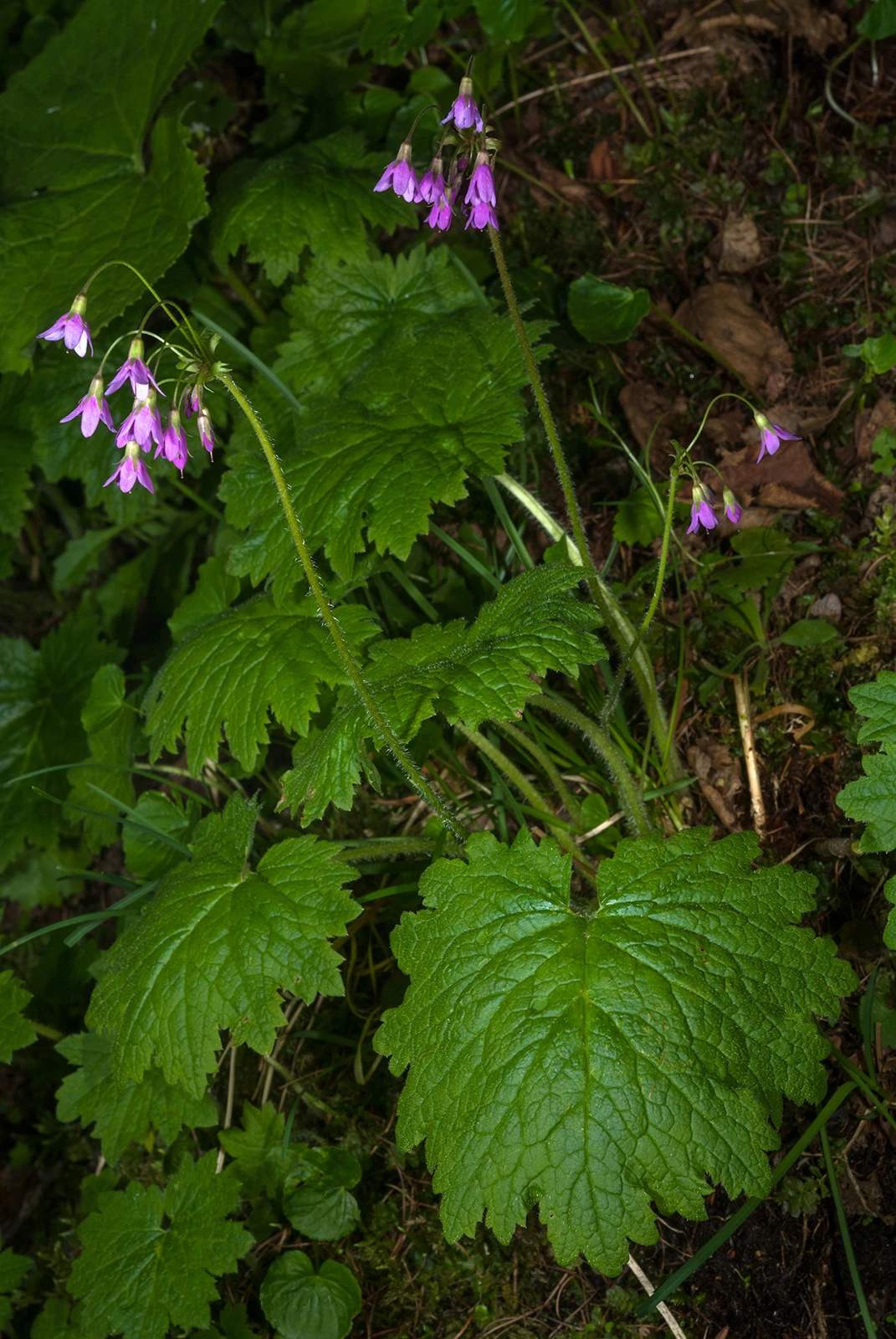
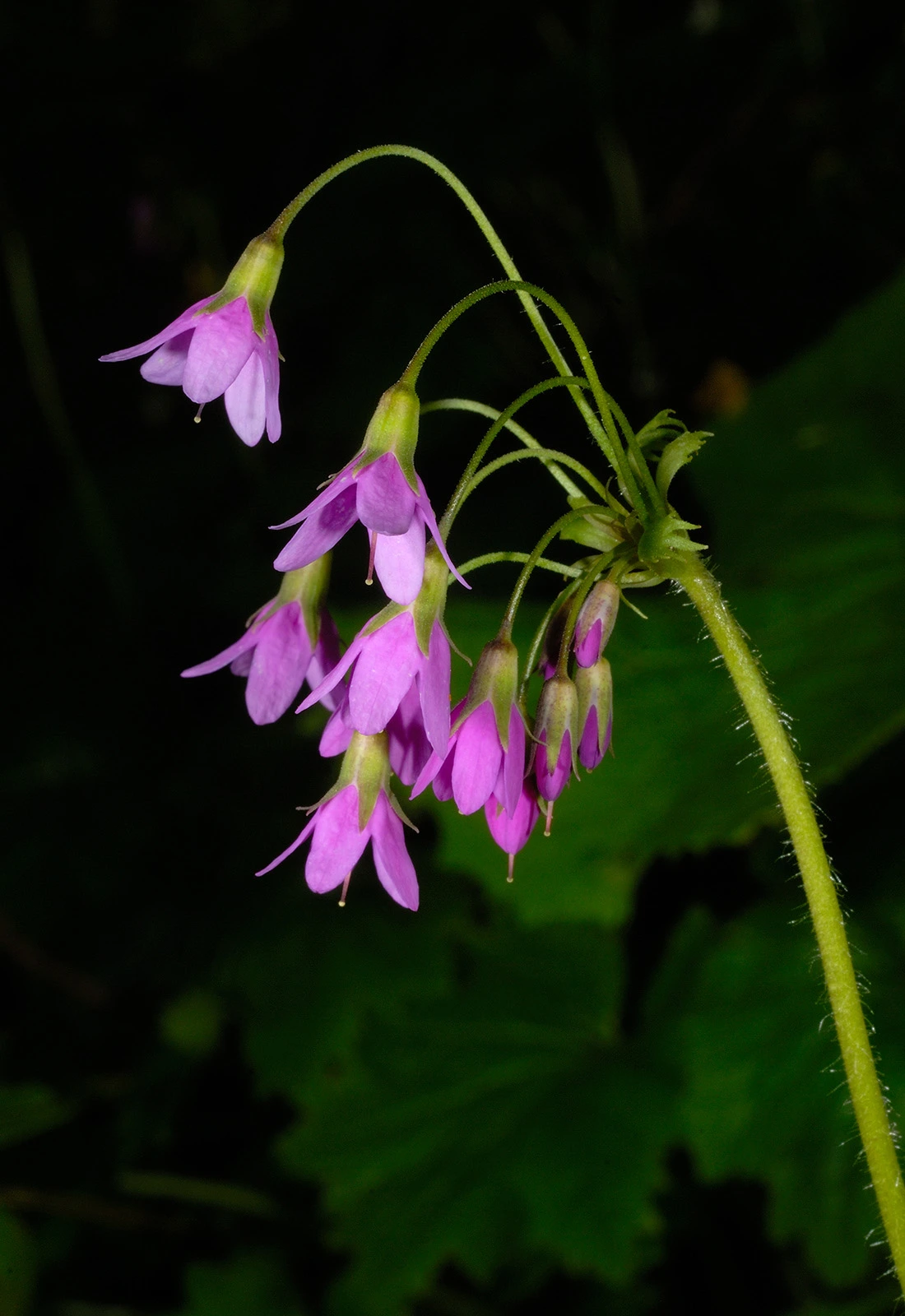
It cannot be confused with other species and is easily recognised by its characteristic pendulous inflorescence, supported by a leafless stem and composed of numerous bell-shaped flowers, mostly one-sided, with a whitish tubular portion and cyclamen-coloured outer parts. The leaves, all basal and with long petioles, have a circular or kidney-shaped blade divided into lobes, which are in turn irregularly toothed.
The genus name is named after Giacomo Antonio Cortuso, a 16th-century botanist who was director of the Padua Botanical Garden, the first modern botanical garden. The species name, on the other hand, is named after Pietro Andrea Mattioli, a 16th-century Sienese physician and botanist, author of one of the earliest botanical works of the modern era.