
Paradisea liliastrum
 See on the map
Listen to audio
See on the map
Listen to audio
- PNGP
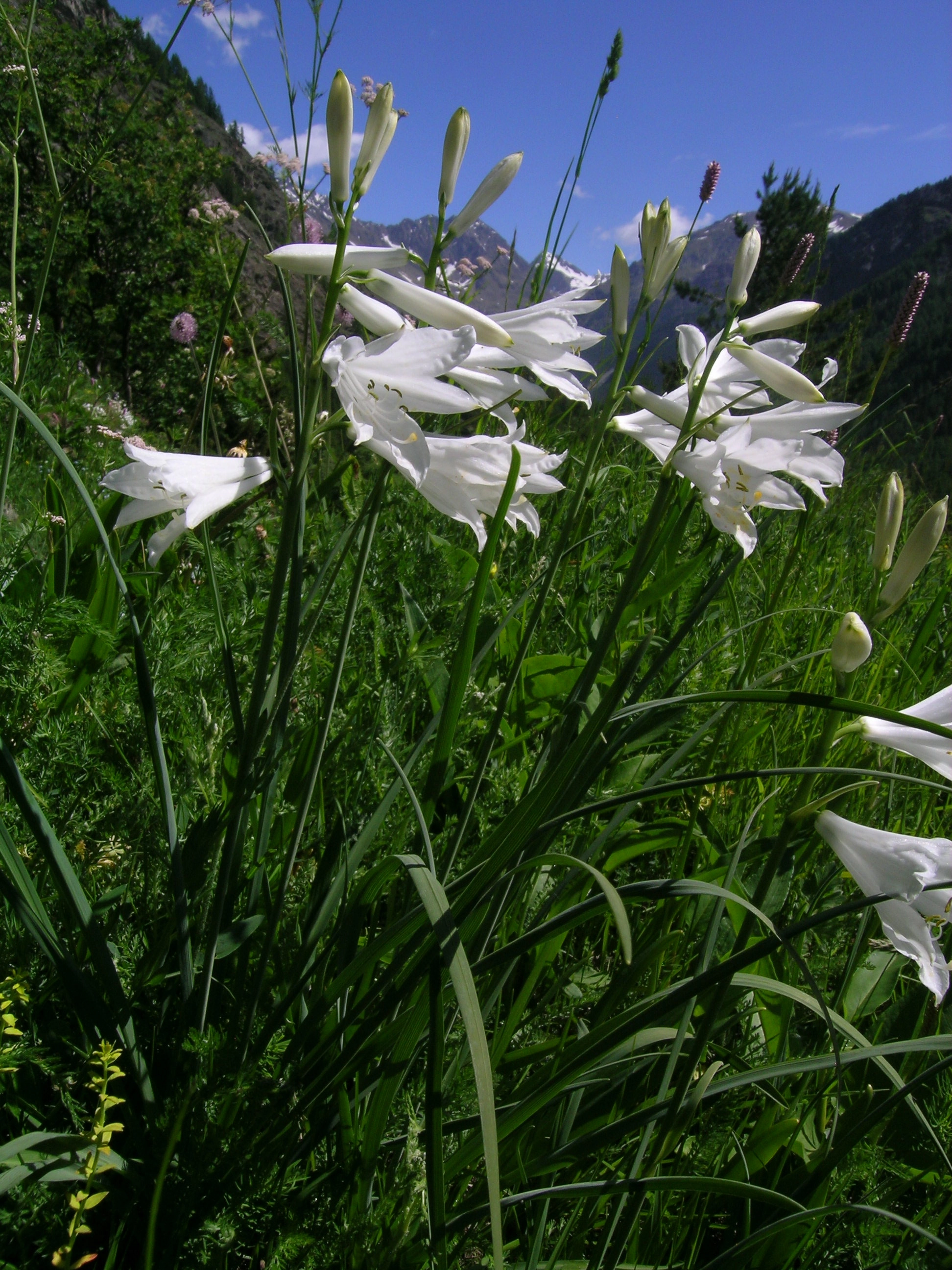
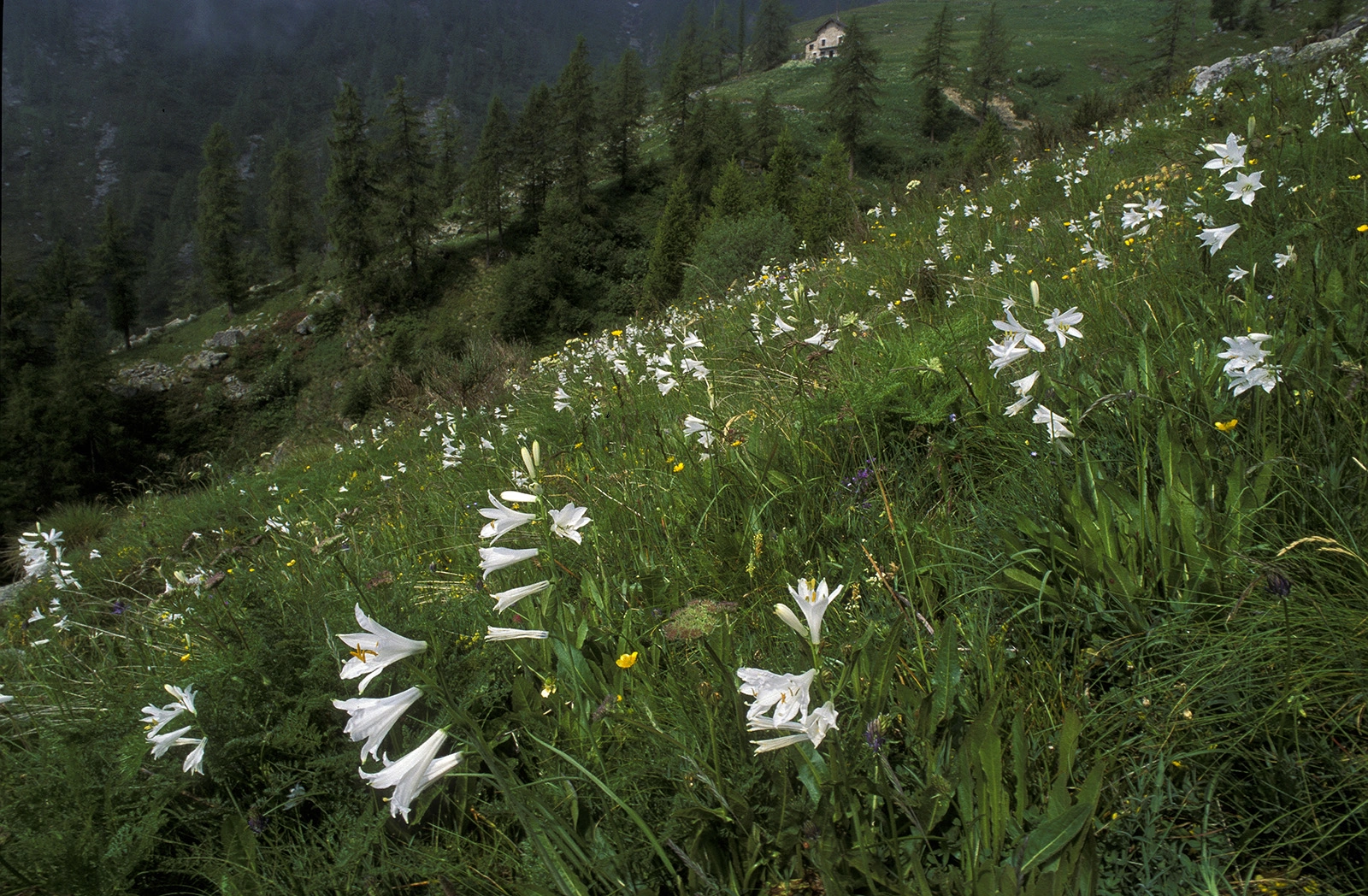
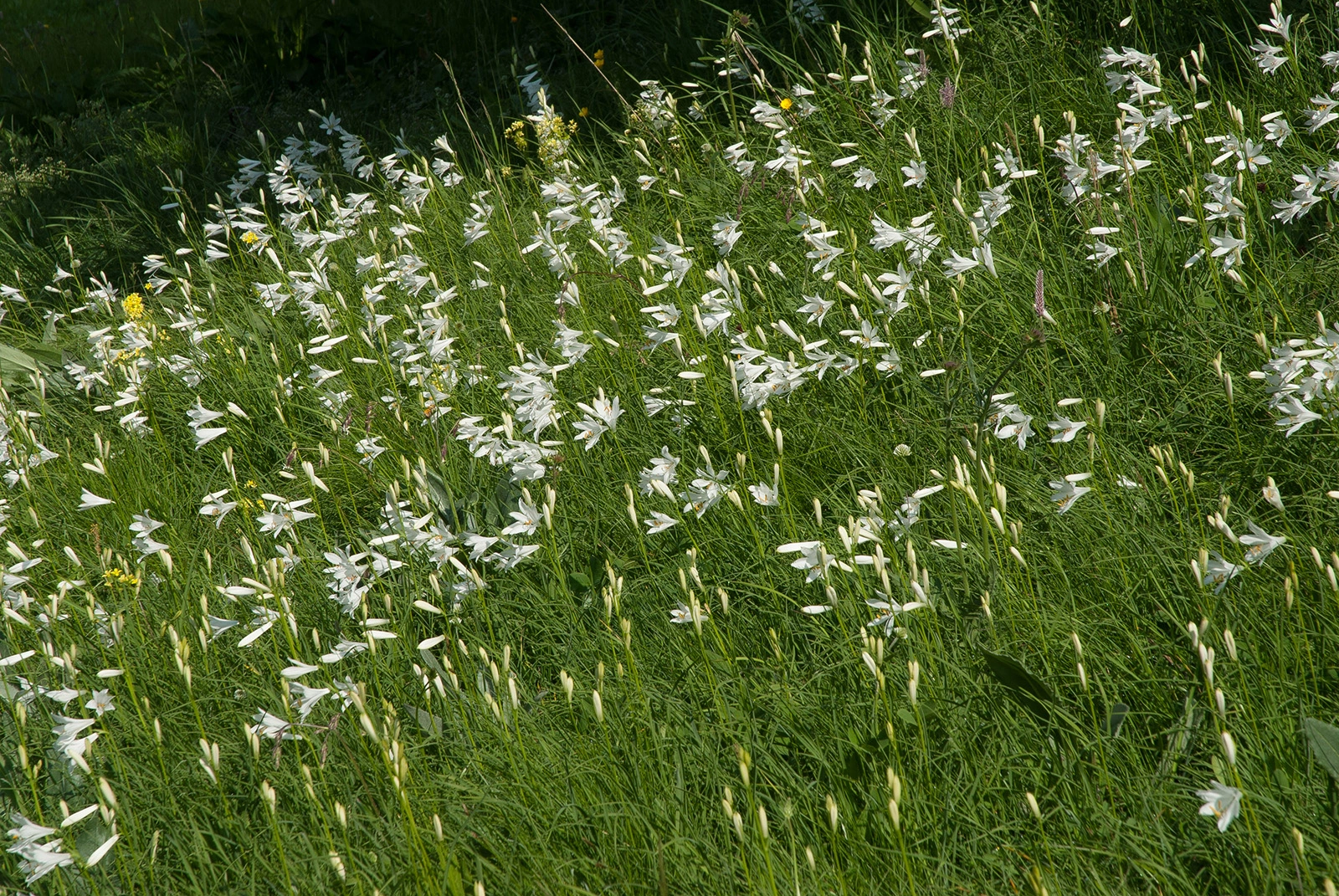
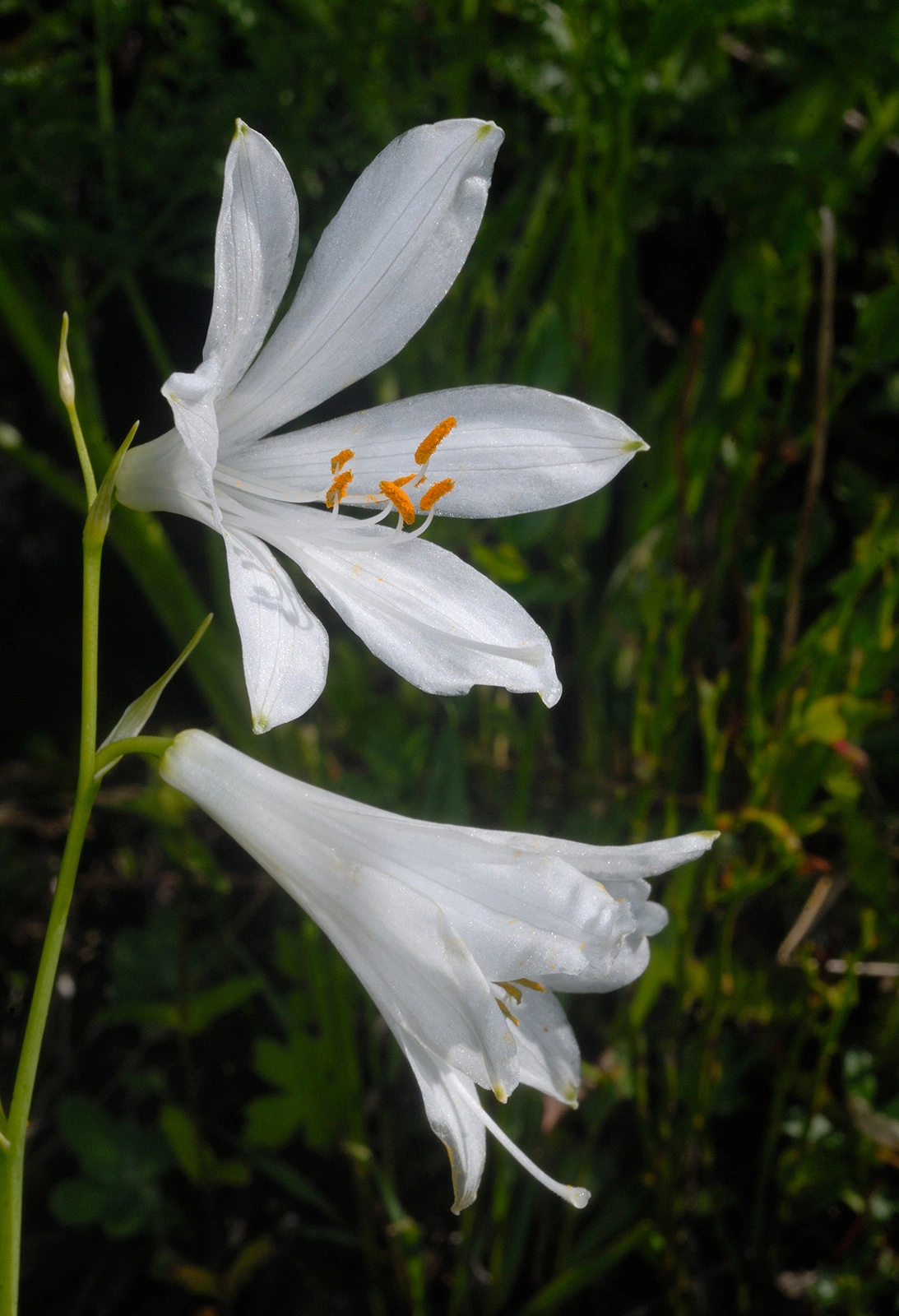
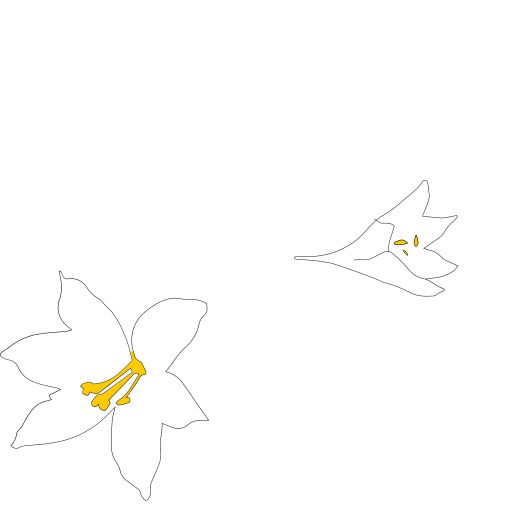
A striking and elegant species found throughout the Alps as far as the central Apennines, it grows in mountain and subalpine pastures and grasslands with a moderate level of organic matter. Commonly known as the St. Bruno's lily or, in italian, ‘Paradisia’, the National Park has chosen to dedicate the Alpine Botanical Garden – where you are now – to this plant, making it the Garden’s symbol.
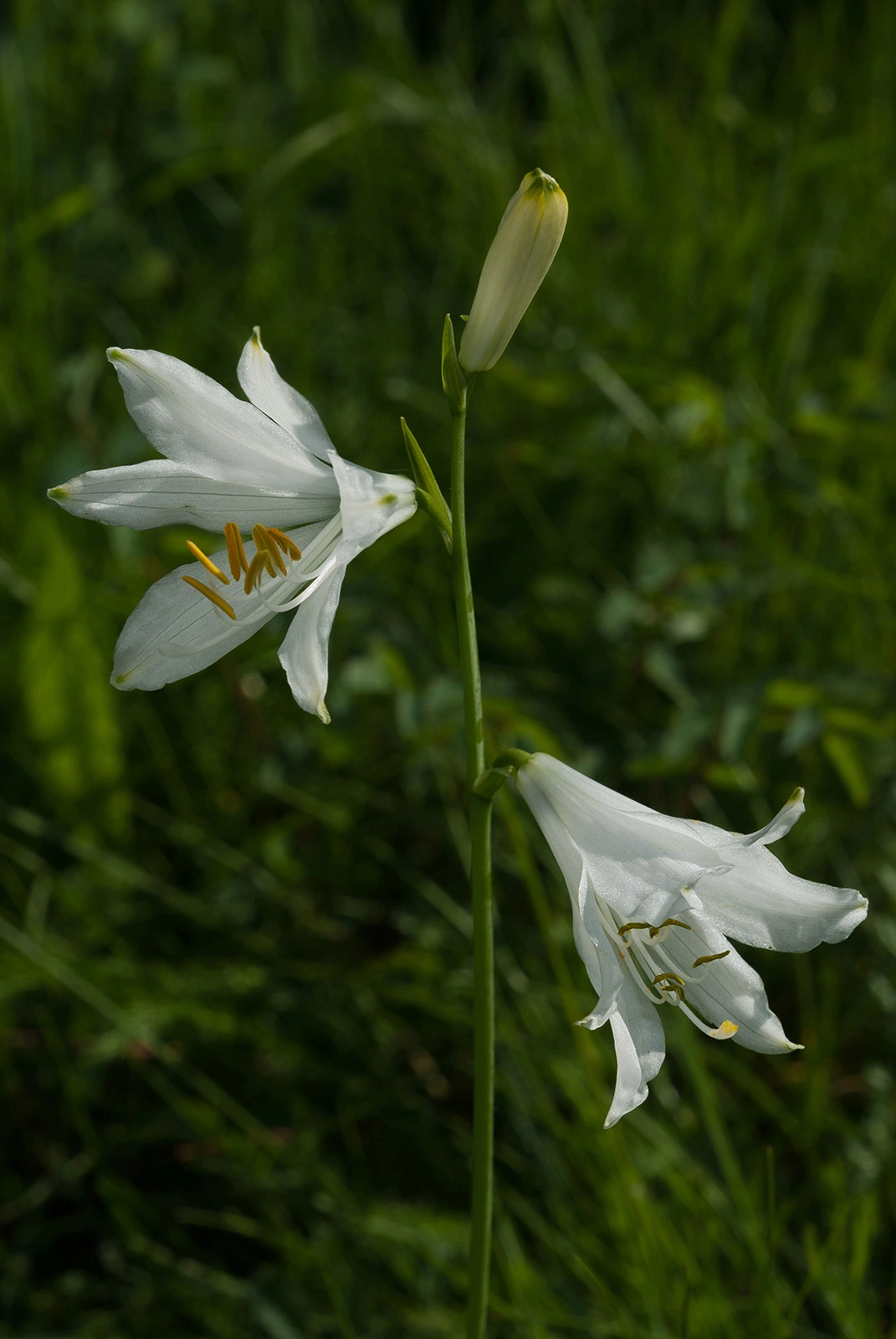
This species is easily recognised by its large, funnel-shaped white flowers borne on a more or less one-sided, leafless raceme, 30–60 cm tall; the leaves, all basal, are linear, grooved and slightly glaucous. It can be confused with Anthericum liliago, which, however, has smaller flowers with narrower petals that do not overlap at the base.
The genus name was dedicated to Count Giovanni Paradisi (1760–1826) of Modena, a poet, man of letters and mathematician, who served as President of the Senate in the Napoleonic Kingdom of Italy, as well as being the patron of Giovanni Mazzucato, the discoverer of Paradisea liliastrum.