
Iris sibirica
 See on the map
Listen to audio
See on the map
Listen to audio
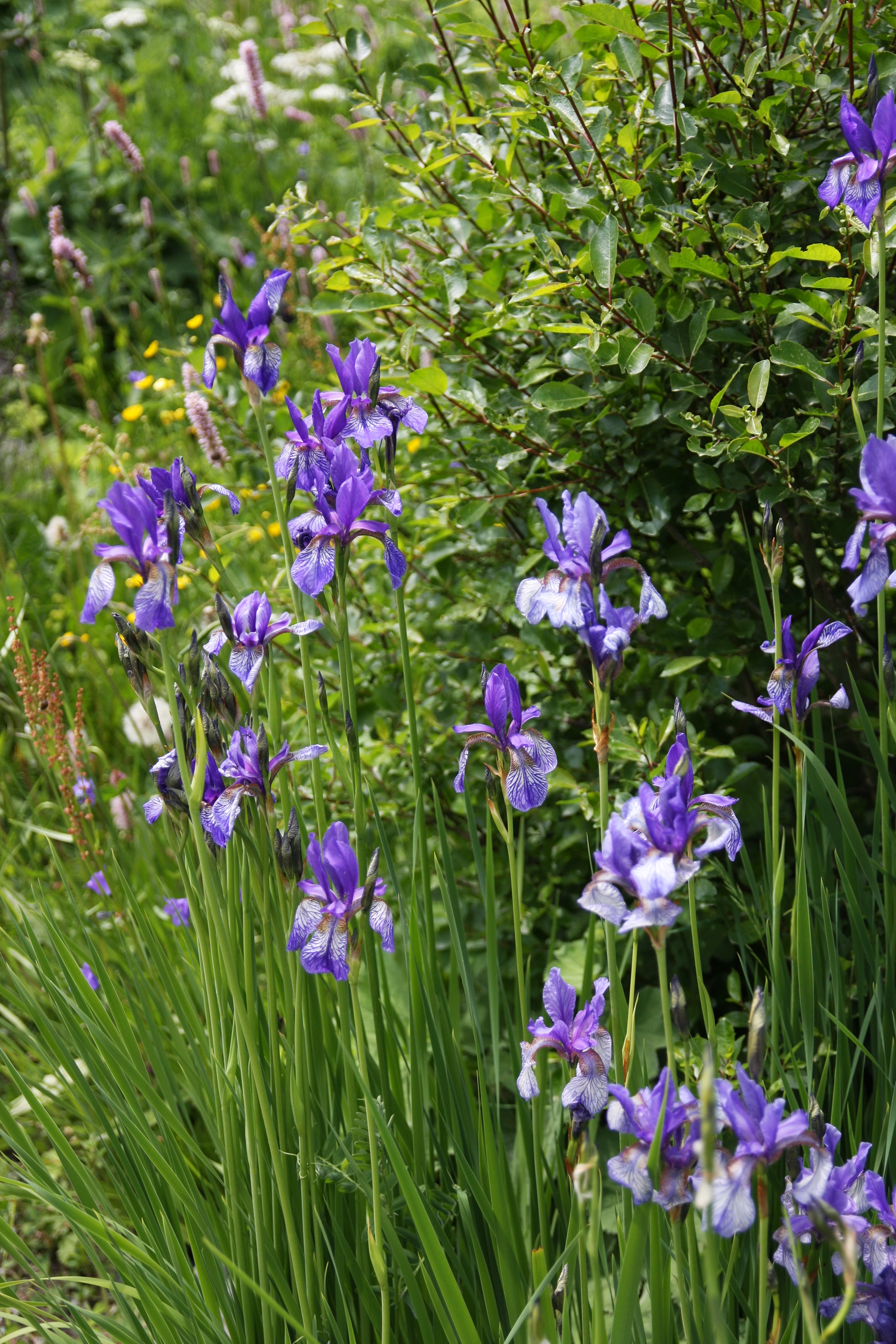
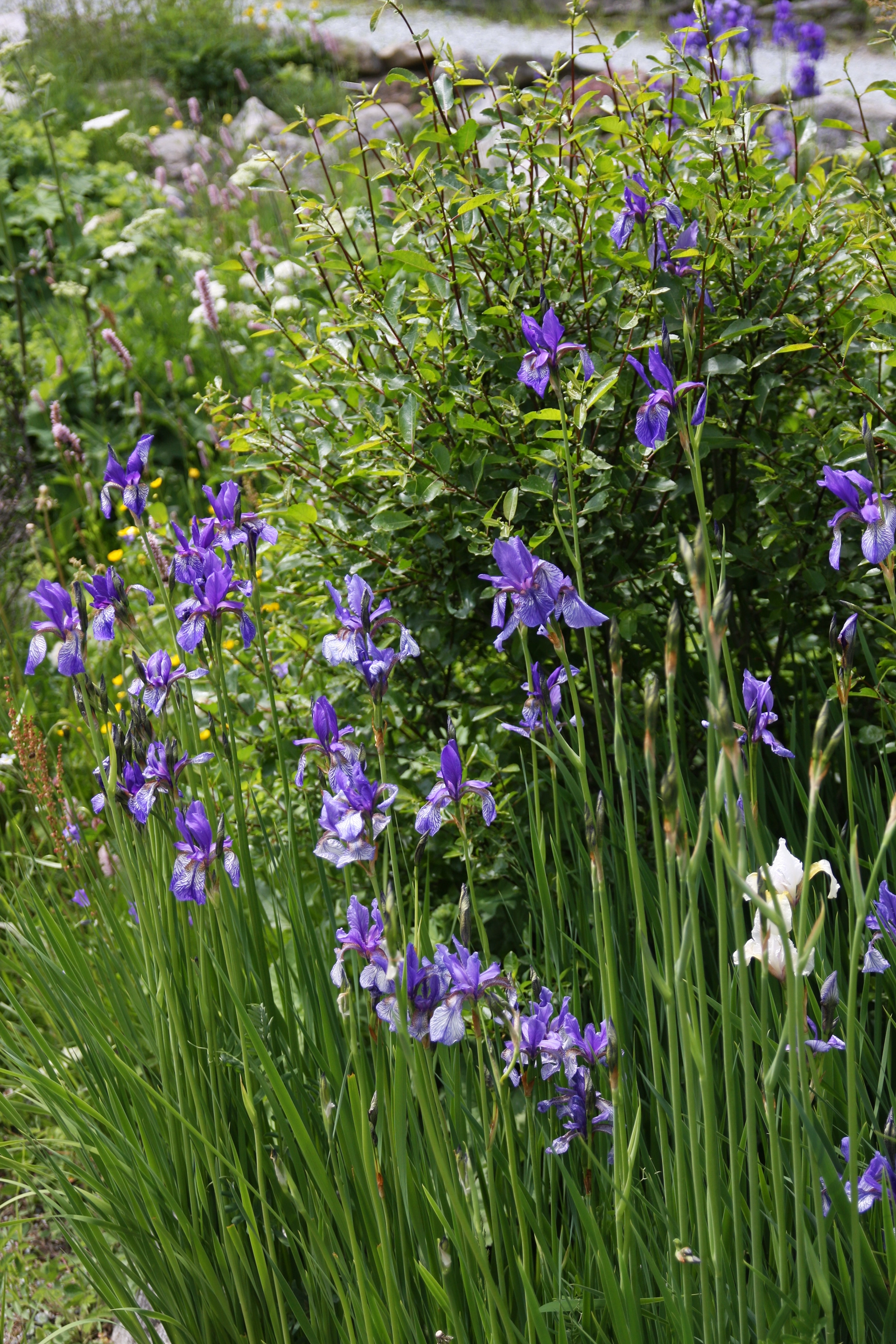
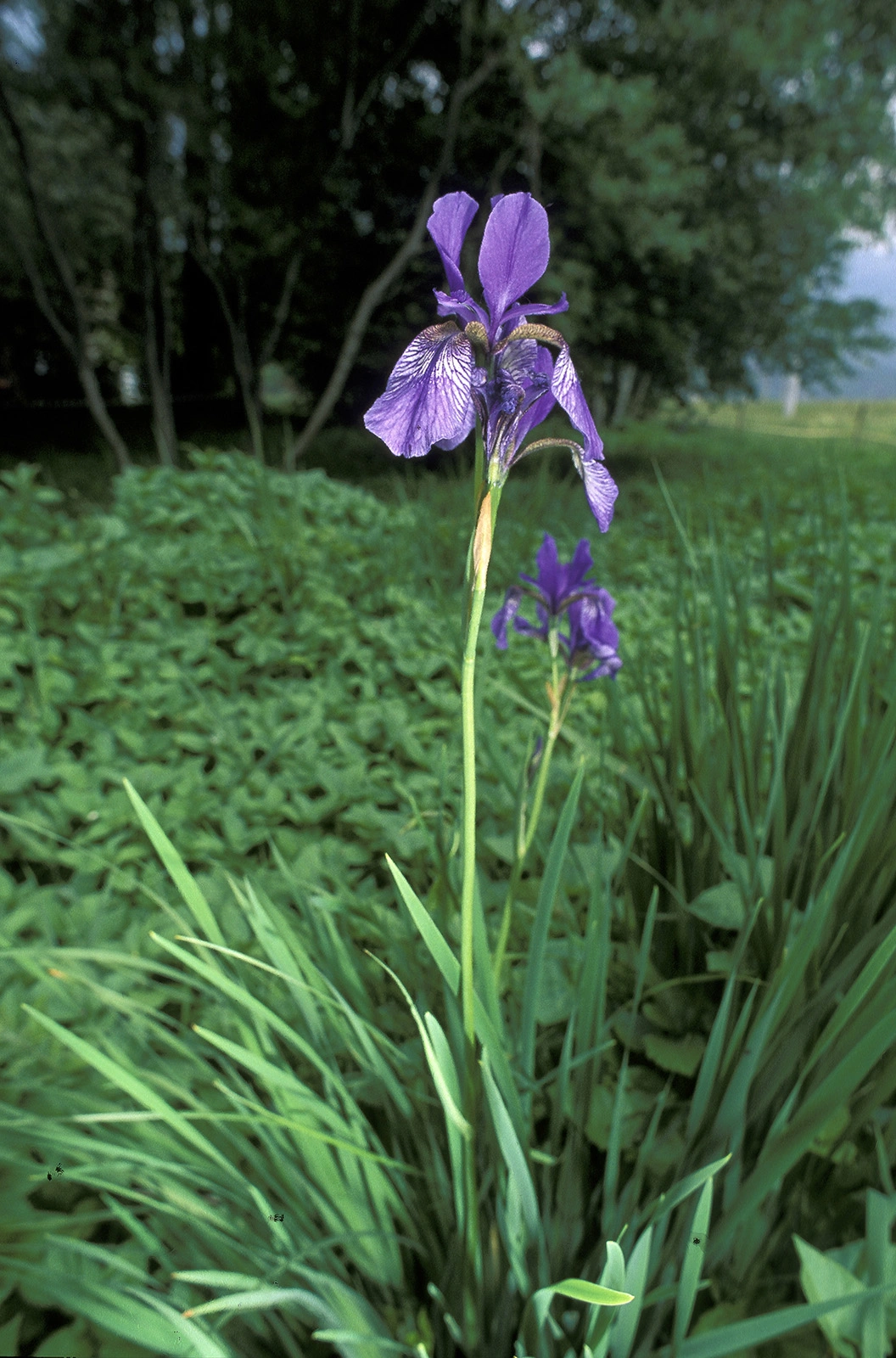
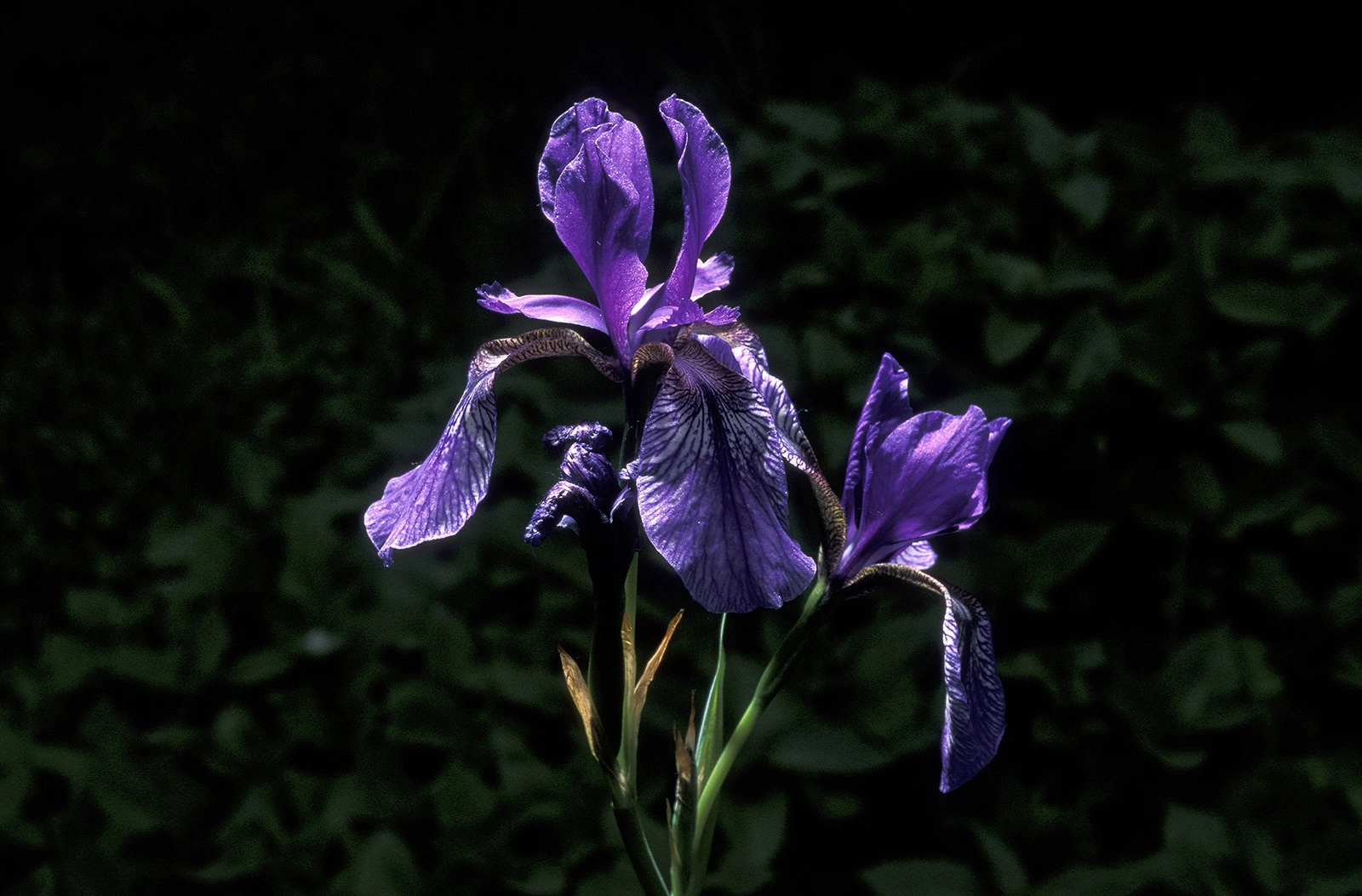
An iris of rare beauty, typical of damp and marshy meadows from the lowlands to the lower mountain zones, it is found throughout northern Italy. It is a protected species and is listed on the IUCN Red List as endengared, as the habitats in which it lives are subject to land reclamation works and are therefore in sharp decline.
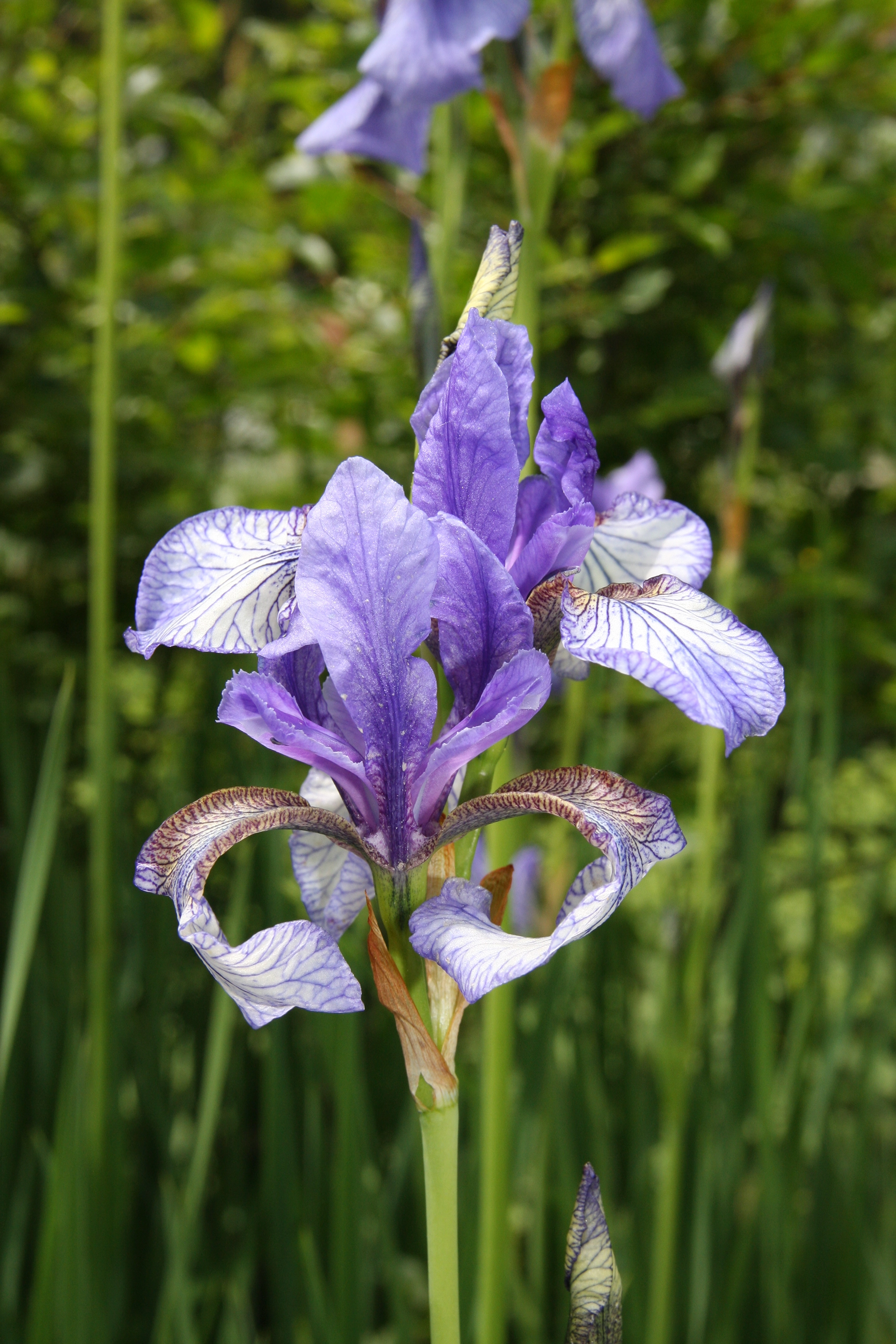
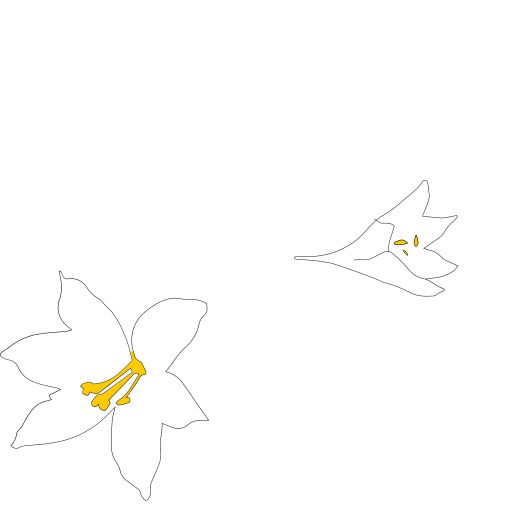
A rhizomatous plant (possessing underground stems known as rhizomes), growing up to 80 cm tall, it has erect stems with leaves that are all basal and linear. The terminal flowers have a distinctive structure, typical of the genus: the three outer tepals, folded downwards, are whitish or pale blue, veined with violet and mottled with yellow-brown at the base; the three inner tepals are erect and blue-violet in colour.
Irises (particularly I. germanica and I. pseudacorus) have been extensively bred by nursery growers to produce ornamental cultivars, suitable for cultivation in gardens and for the production of cut flowers.