
Aethionema thomasianum
 See on the map
Listen to audio
See on the map
Listen to audio
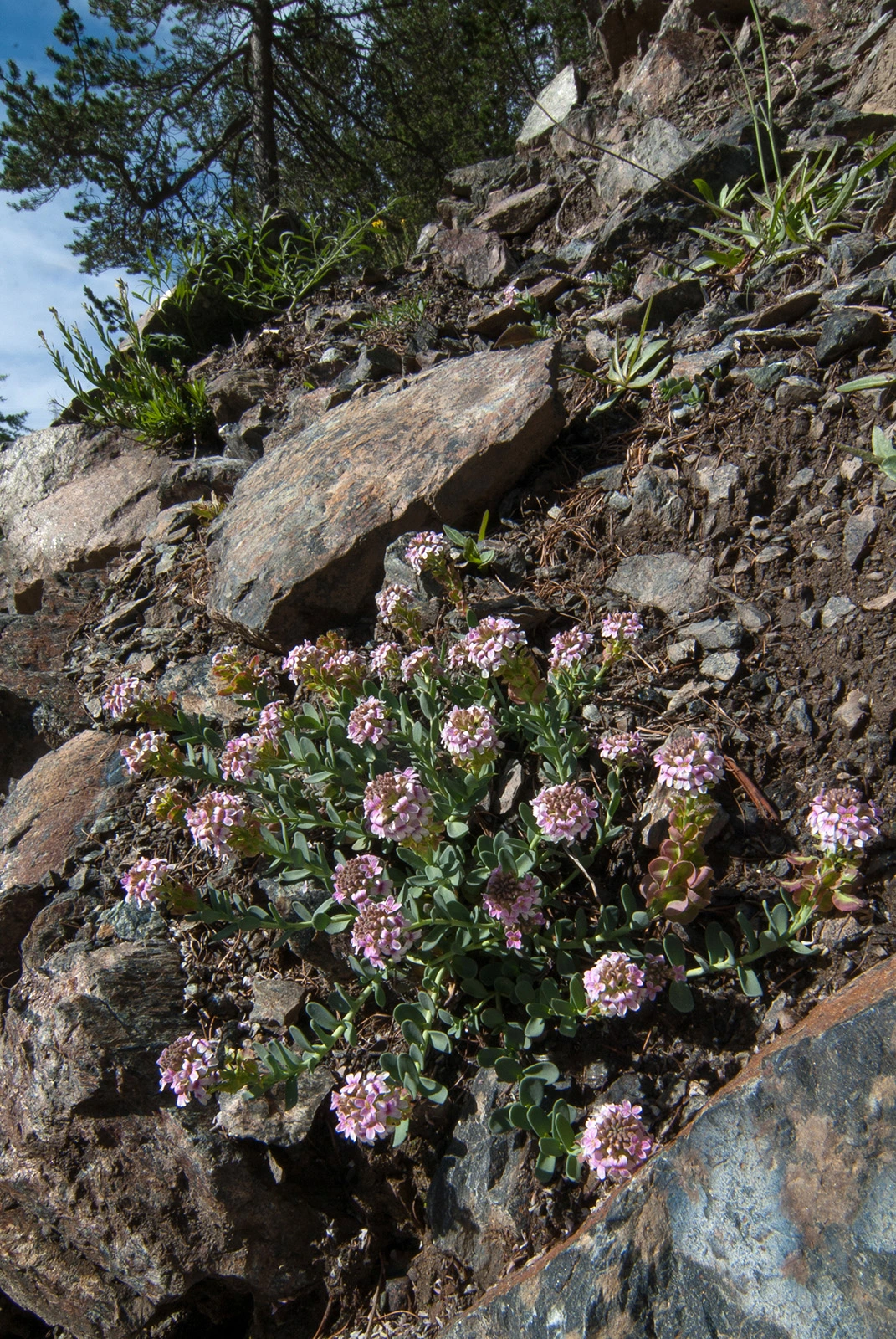
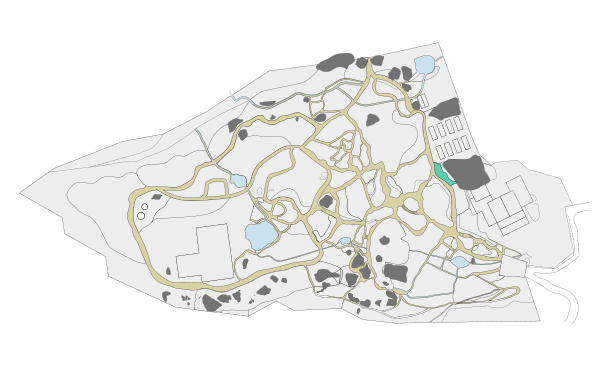
Found on the orographic right bank of the Val di Cogne, where it was discovered by Emmanuel Thomas on 29 July 1845, it is one of the rarest and most important species in the Aosta Valley. Easily recognisable but difficult to observe due to its rarity, in Italy it is found only in the Val di Cogne and, to a very limited extent, in the Val Susa, Piedmont. Generally speaking, it is a plant with a fragmented range, occurring exclusively in the aforementioned Italian areas, in the Briançon region of France, and at a few isolated sites in Spain.
This plant belongs to the same family as cabbages (Brassicaceae) and it grows in very arid and dry habitats on soils composed of calceschist debris (a type of limestone): these are extreme and highly selective environments.
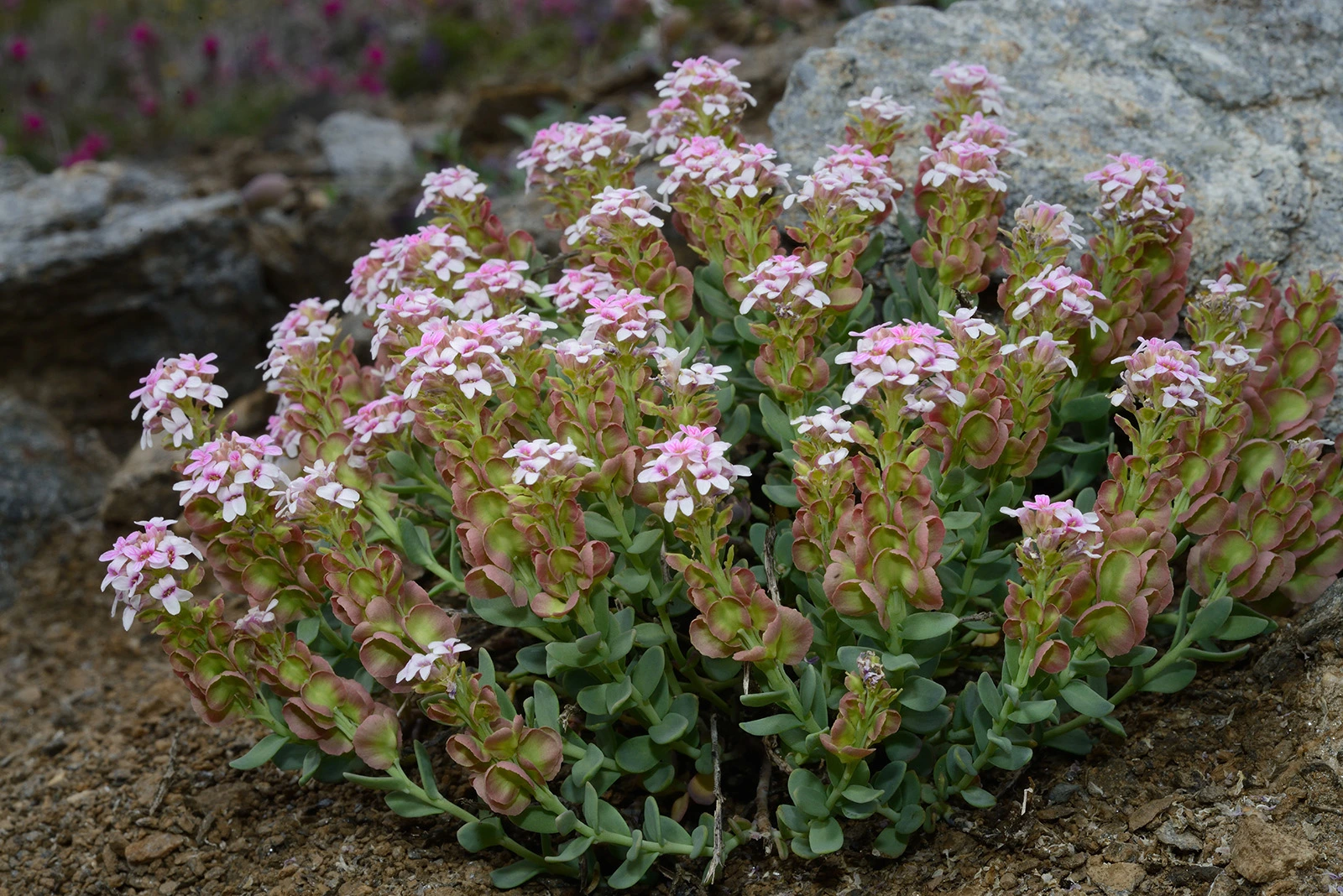
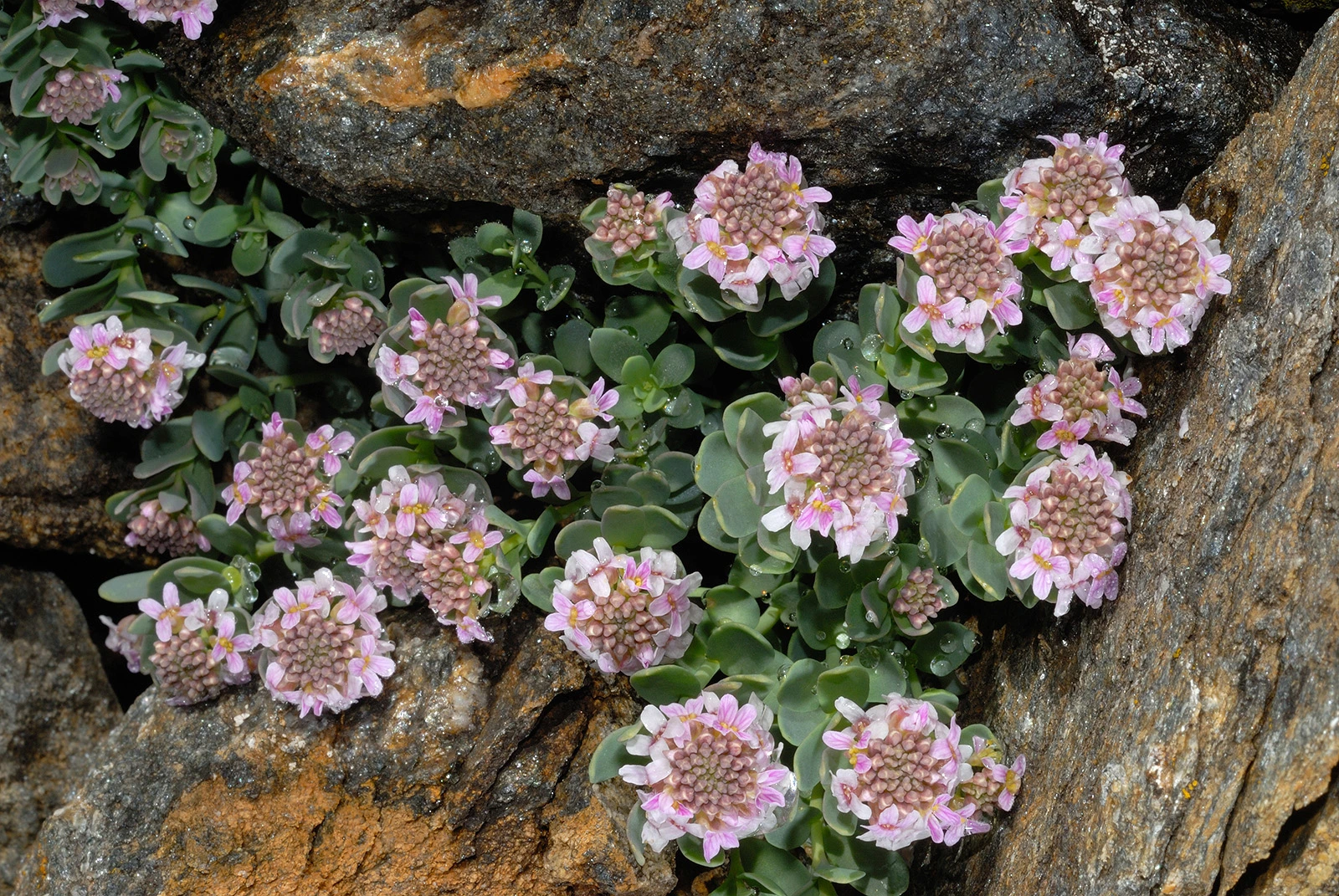
It is a small, creeping perennial herb with closely spaced, elliptical, blue-green leaves. The inflorescences consist of clustered flowers, which are pale pink in colour with darker streaks.
In the Aosta Valley, it is a strictly protected species; consequently, its collection, damage and eradication are prohibited.