
Campanula thyrsoides
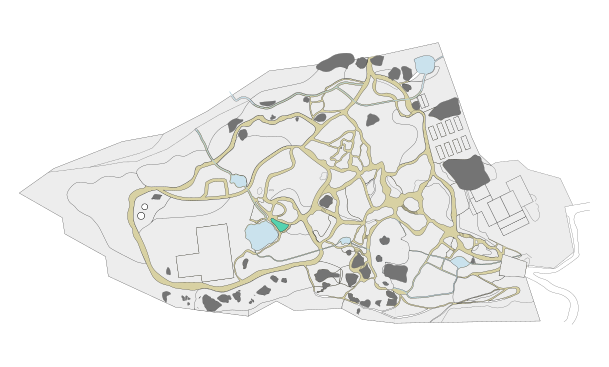 See on the map
Listen to audio
See on the map
Listen to audio
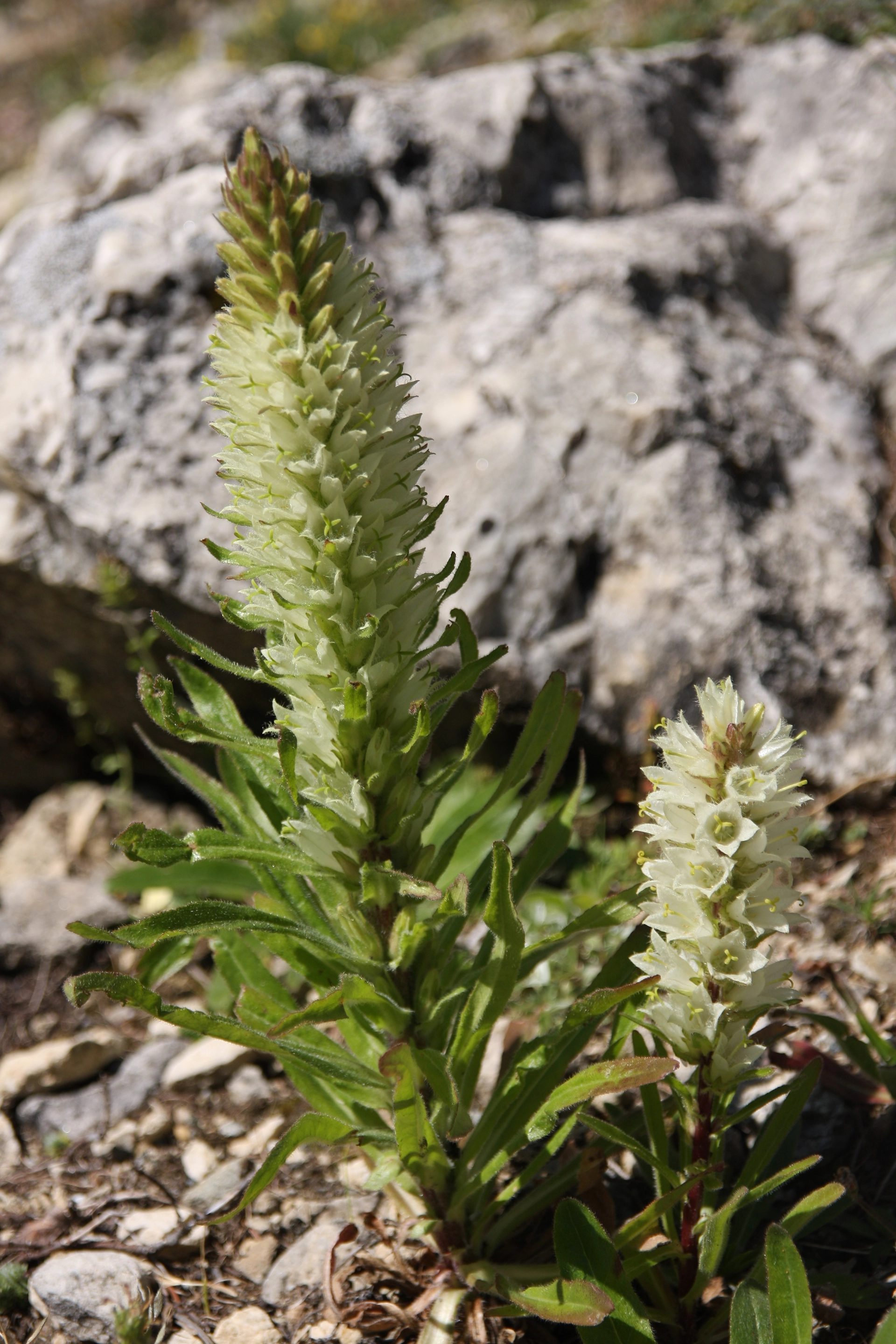
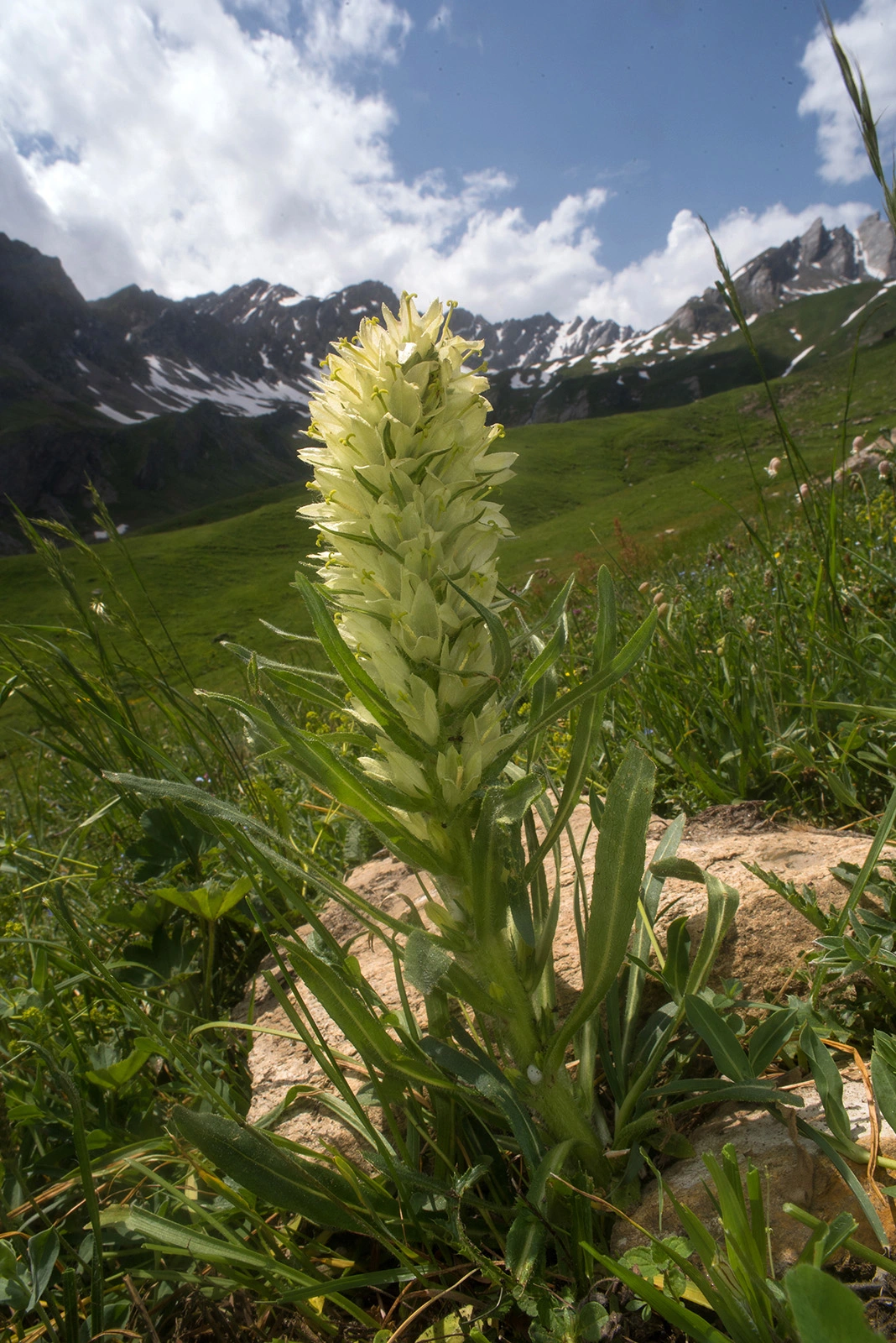
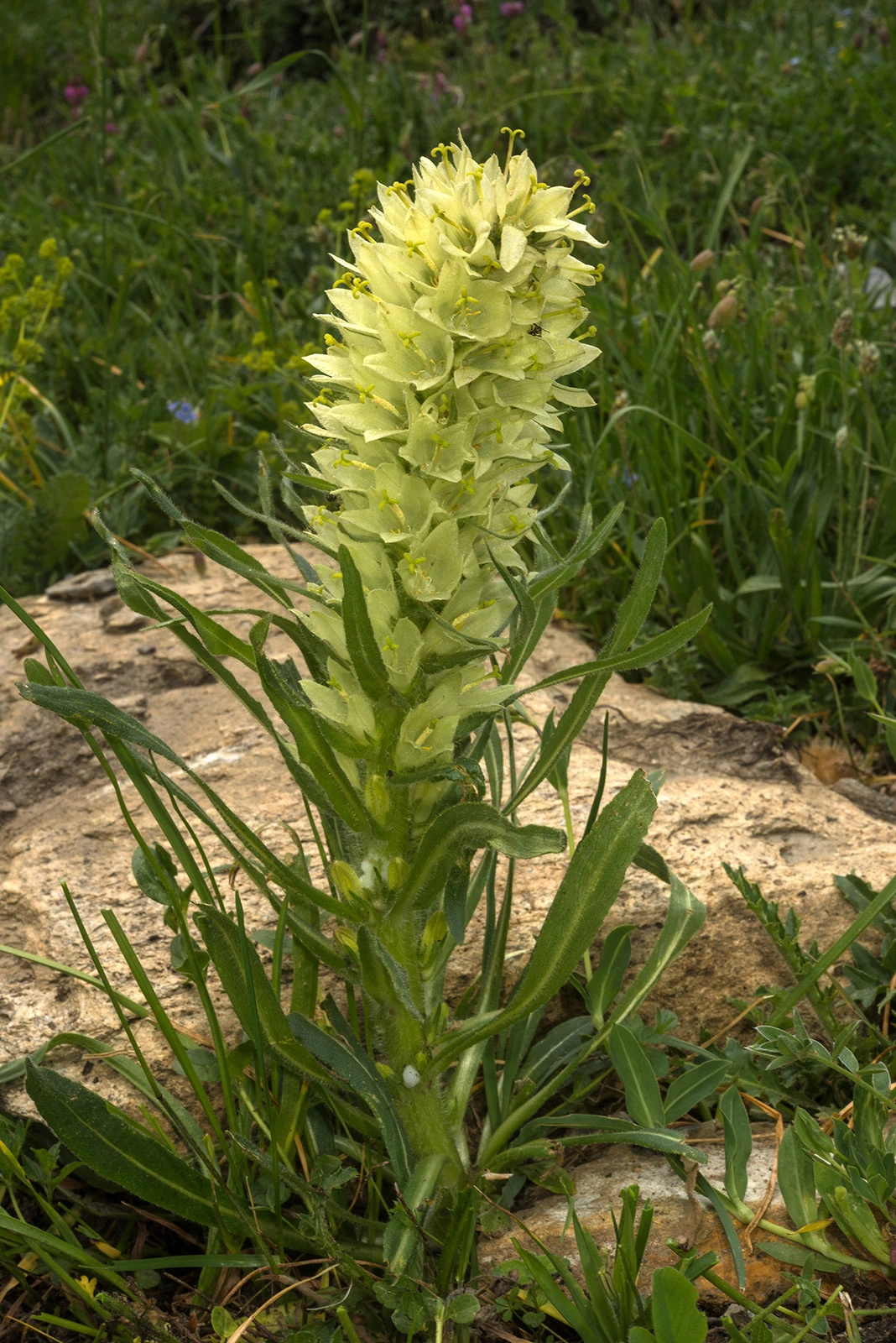
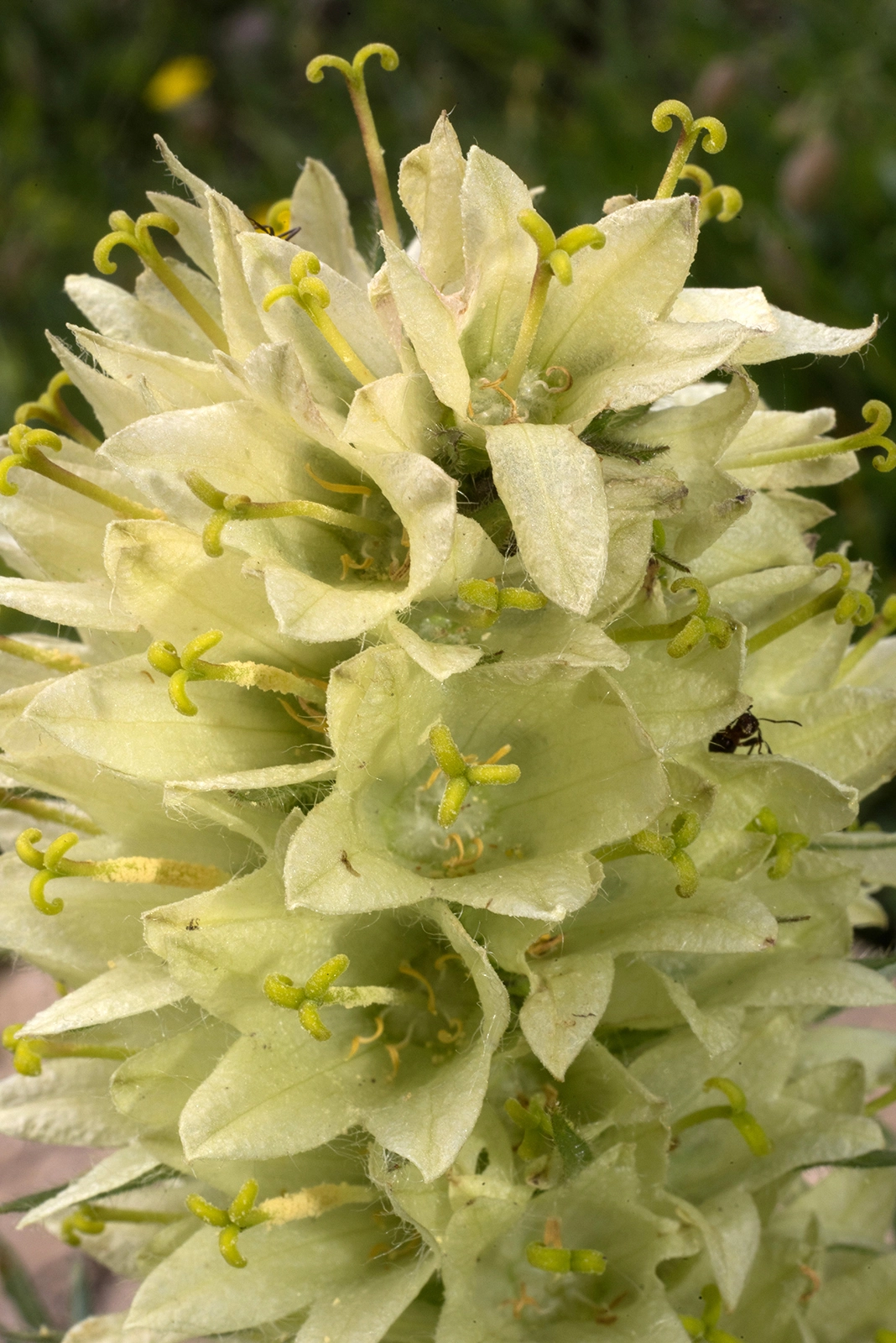
This species, found throughout the Alps but with a fragmented distribution, is common in pastures on limestone substrates, at altitudes of between approximately 2,000 and 2,650 metres. It is a species protected on the national level. It has a very striking inflorescence, which makes it easy to recognise: a dense terminal spike, cylindrical or oval in shape, consisting of numerous yellow flowers.
It is a plant that survives long winter periods thanks to buds situated at ground level. It is a biennial plant, meaning it completes its entire life cycle – emergence, development, reproduction and death – over the course of two years. Another characteristic of C. thyrsoides is the presence of sturdy hairs, which give it a bristly appearance all over.
The genus name derives from Latin and means ‘little bell’, referring to the shape of the corolla. The specific epithet thyrsoides, from the Greek thyrsos, refers to the distinctive shape of the inflorescence, which resembles a thyrsus, the mythical staff of the Bacchantes symbolising the life force of the god Dionysus.