
Pulsatilla halleri subsp halleri
- PNGP
- Endemism
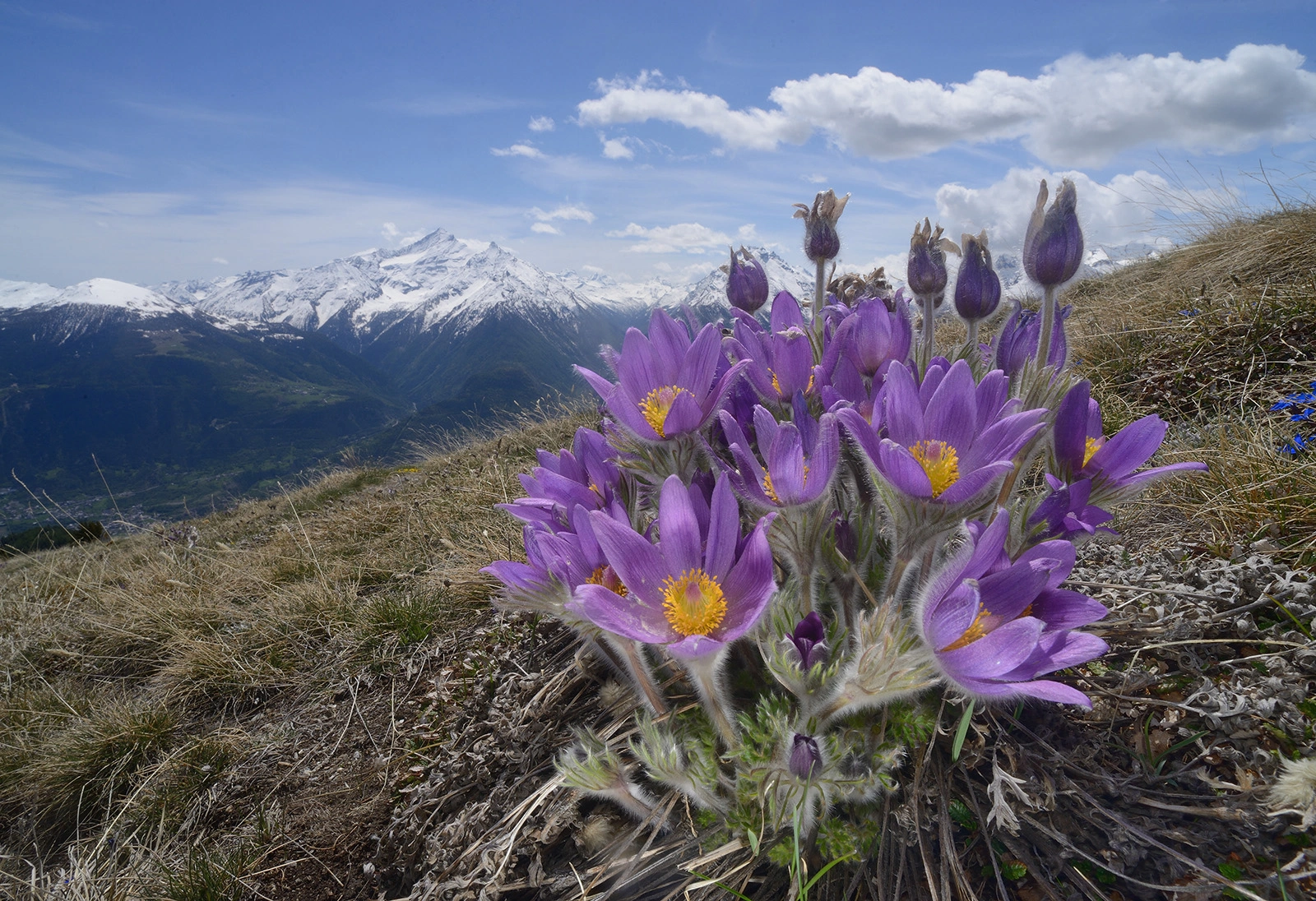
A rare species, endemic to the Western Alps, it is found in Italy exclusively in Piedmont, where it is strictly protected, and in the Aosta Valley, where its collection is regulated. A species typical of steppe-like habitats (arid and sunny), it is found in alpine, subalpine and mountain pastures, particularly where there is a limestone substrate. It grows at altitudes ranging from 1,000 to 2,500 metres, but is rarely found below 1,500 metres.
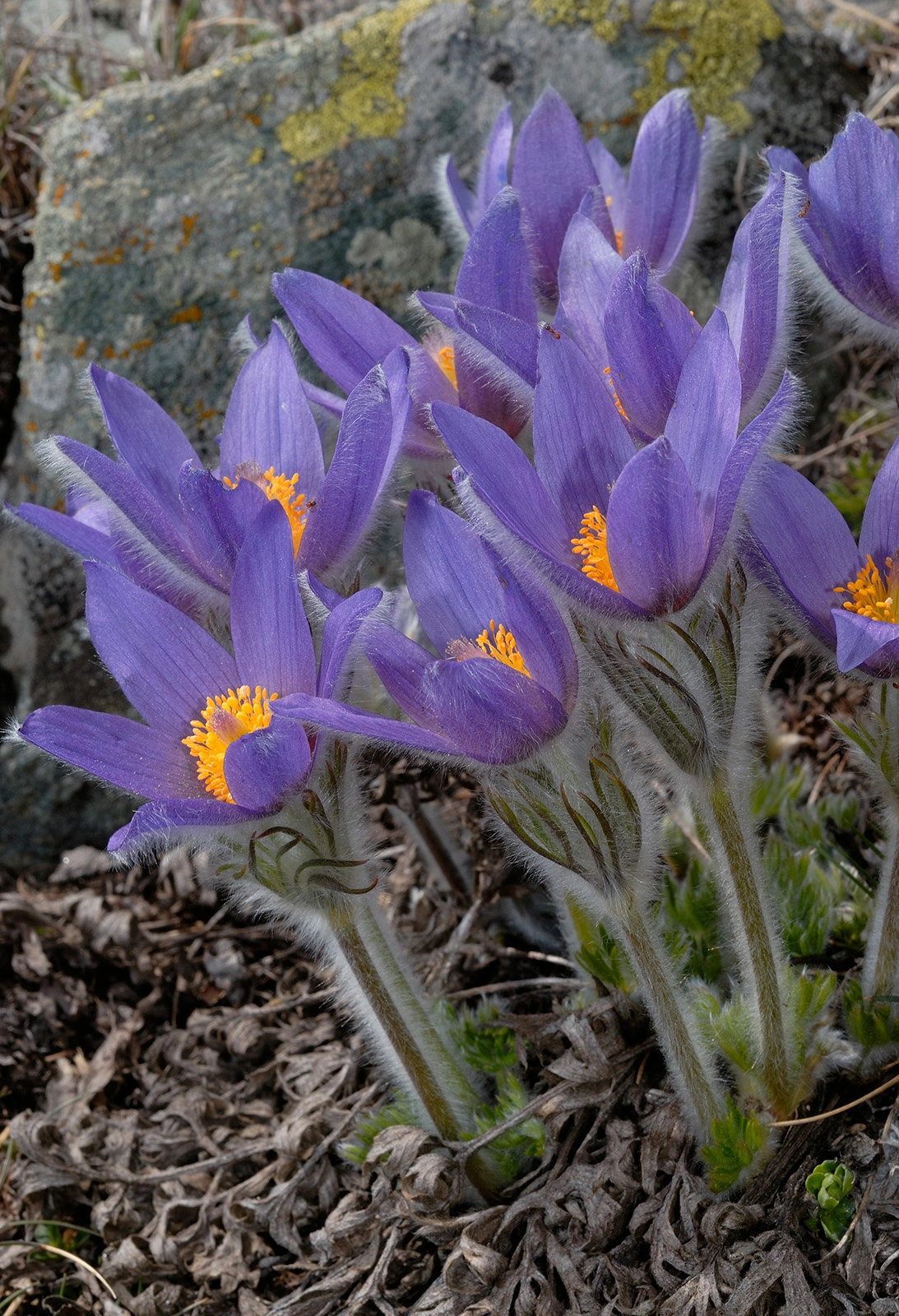
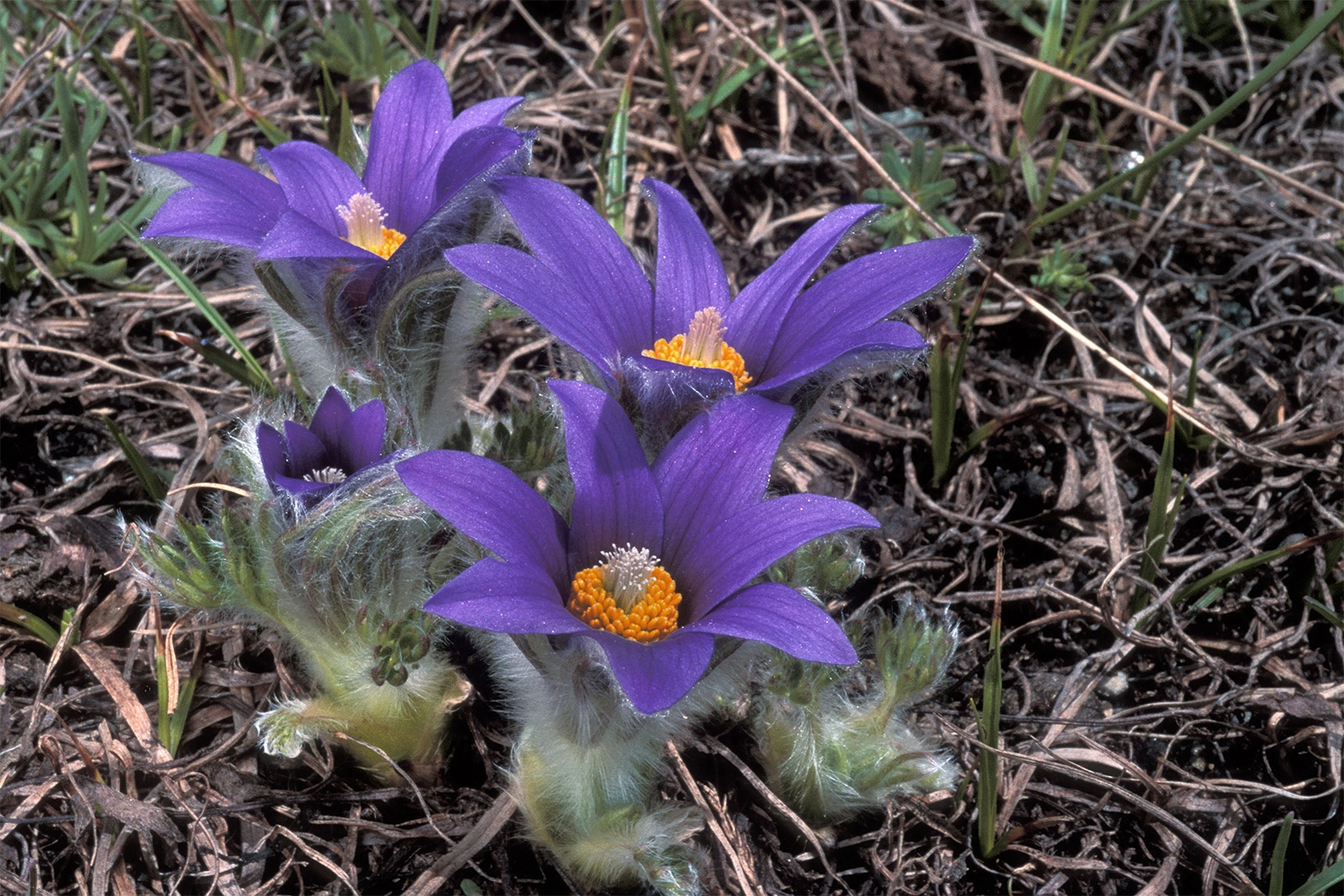
A perennial herbaceous plant, 10 cm to 30 cm tall, it develops basal leaves after flowering. Very similar to Pulsatilla montana, which, however, is found at lower altitudes, it is easily recognised by the dense, long silvery hairs covering the entire plant and by its erect, purple flowers, which are also hairy on the outside.
Like other species of the genus Pulsatilla, it produces a fruit, known as an achene, with a characteristic feathery appearance.
The genus name derives from the Latin pulsare, meaning ‘to shake’ or ‘to move’, referring to the movement of both the flowers and the achene when stirred by the wind. It is a toxic species, like all plants belonging to the Ranunculaceae family.