
Anemone narcissiflora
 See on the map
Listen to audio
See on the map
Listen to audio
- Poisonous
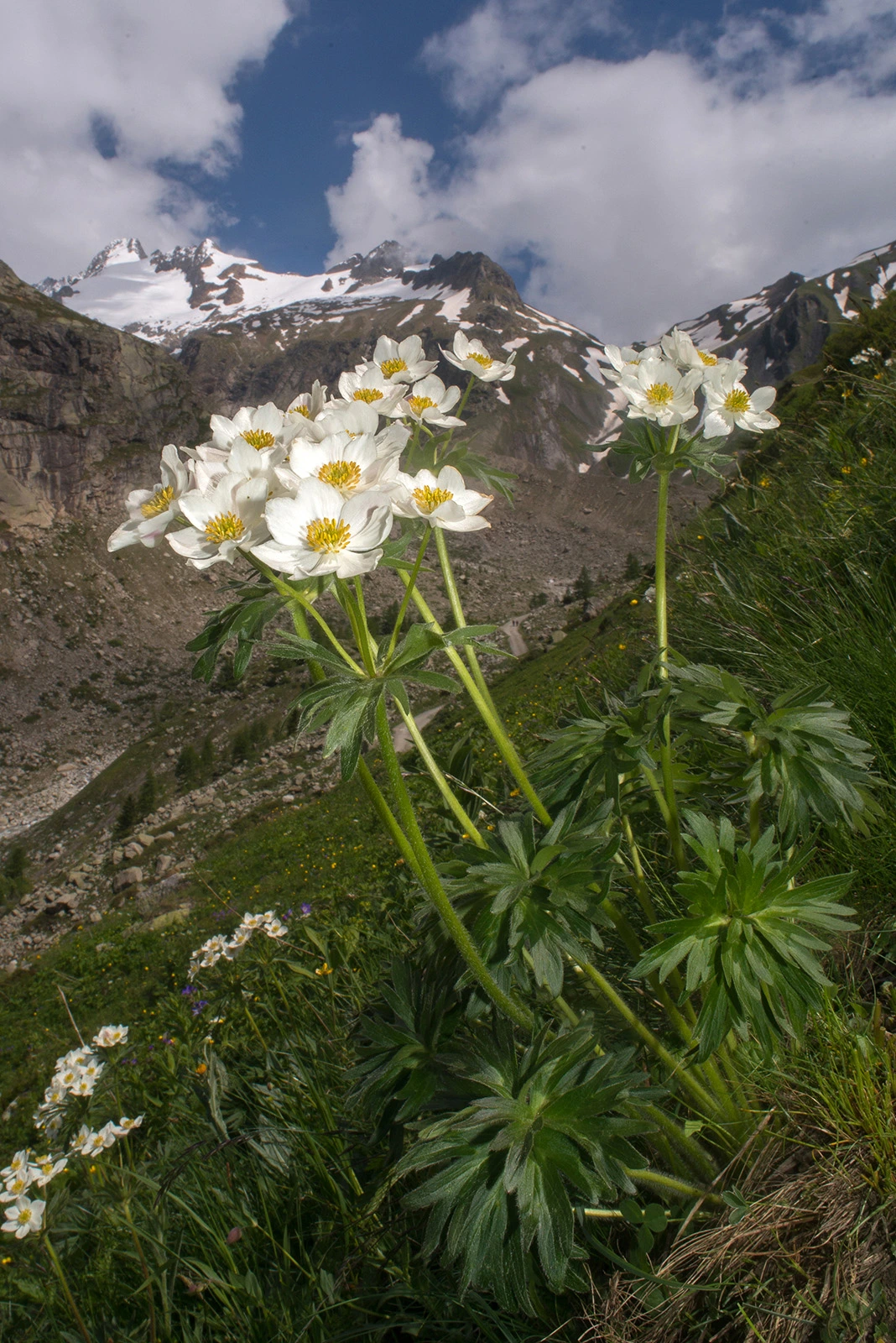
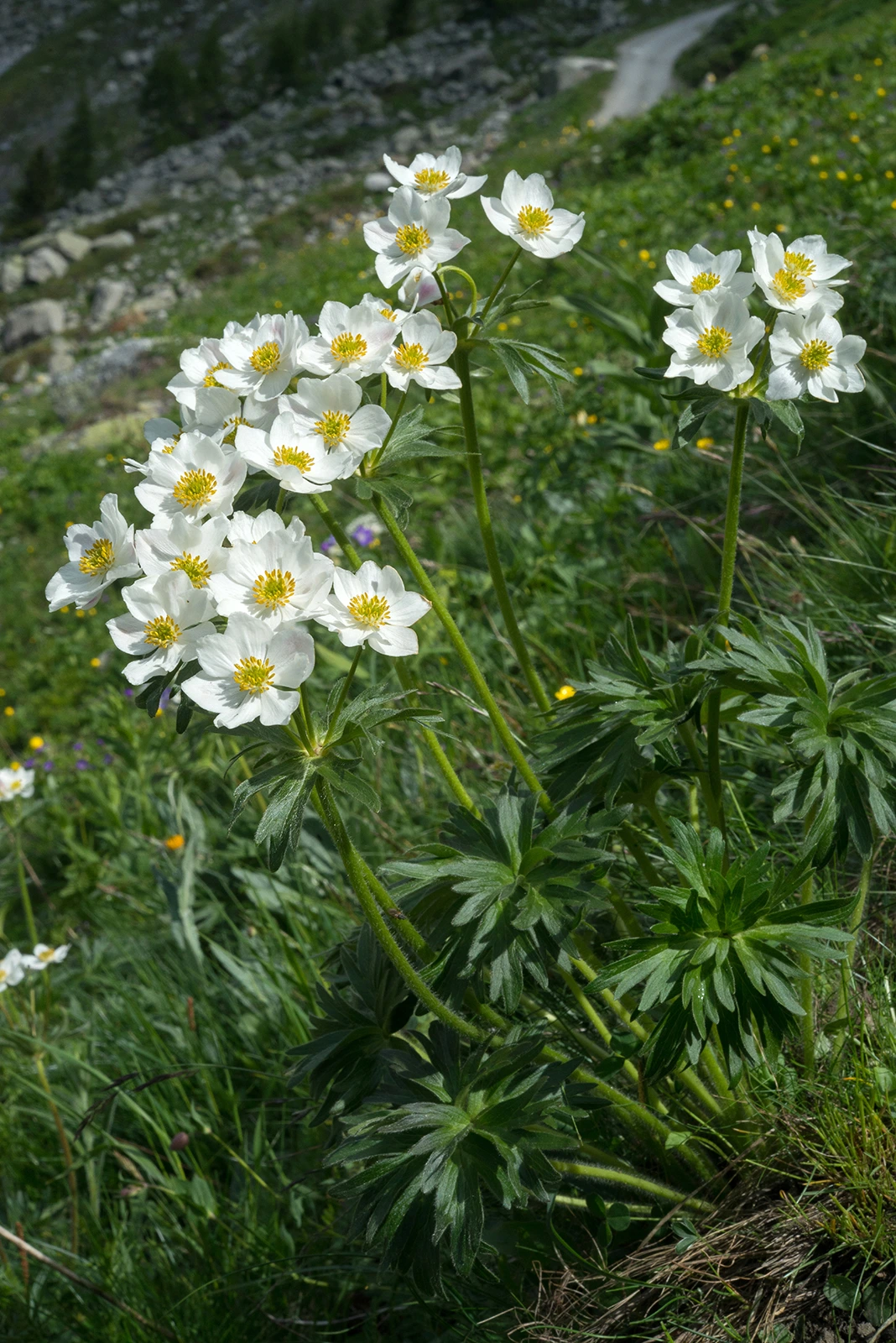
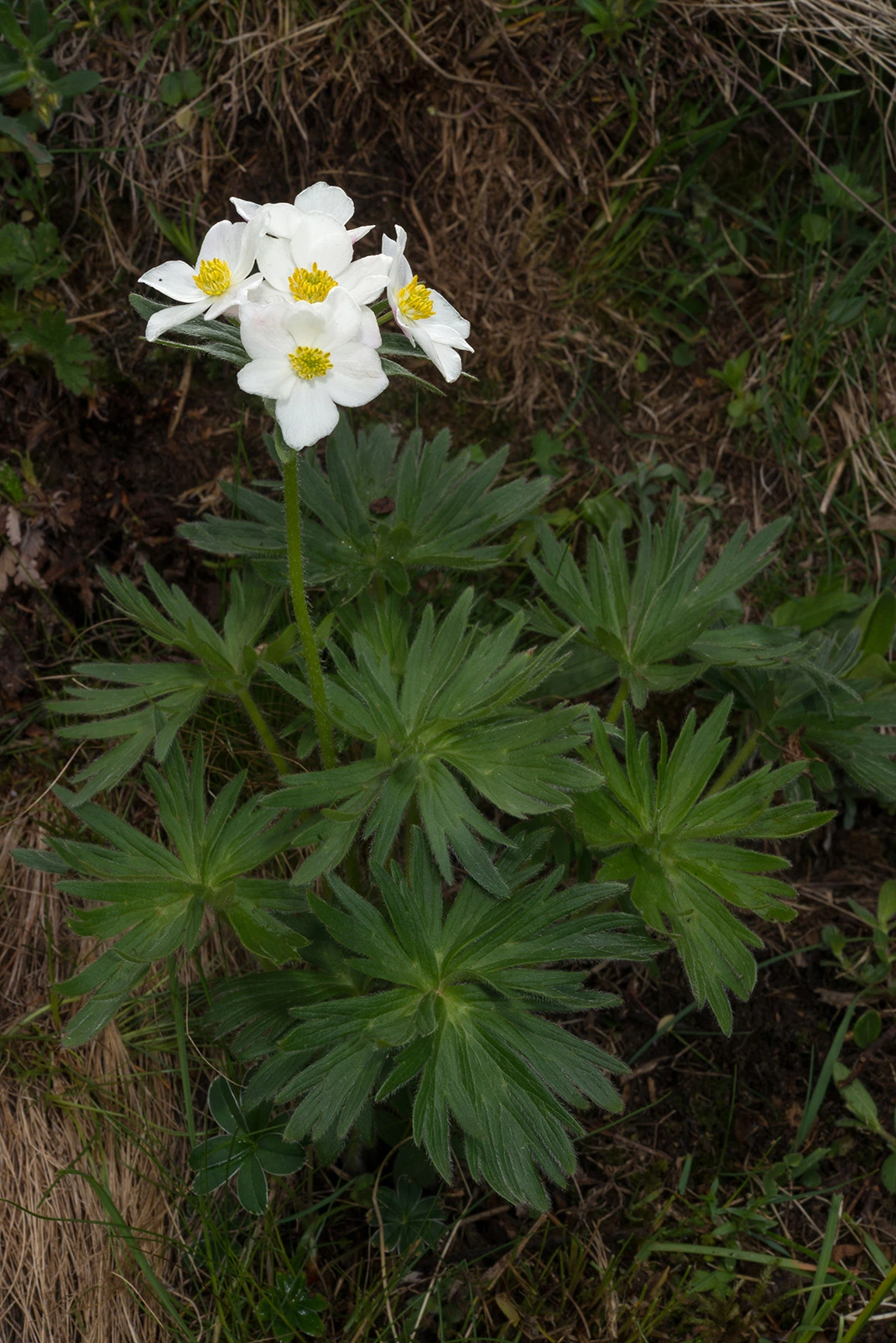
A species of remarkable beauty, fairly common throughout the Alps, it is extremely rare in the Aosta Valley, where there is only one known isolated location in the upper Val Ferret at an altitude of around 1,900 metres. It cannot be confused with other species of anemone, as its flowers, with their pure white corollas, are arranged in umbels and do not occur singly.
It is a small herbaceous plant classified as a rhizomatous geophyte, meaning it is a perennial plant that bears its buds underground. During the dormant season, it has no above-ground parts, and the buds are found in underground structures called rhizomes; an underground stem from which roots and above-ground stems emerge each year. The entire plant is woolly.
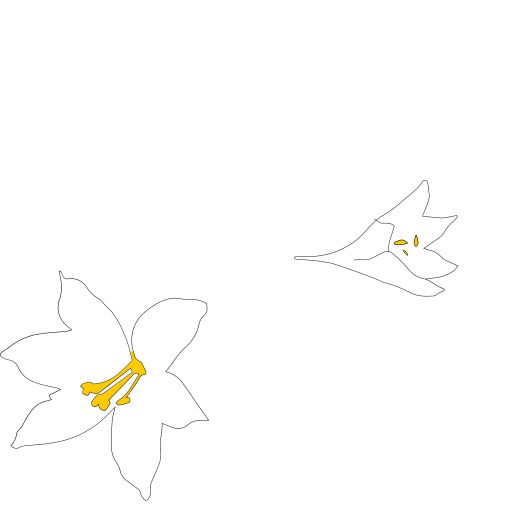
Like all species belonging to the Ranunculaceae family, this plant is poisonous to both humans and animals. The genus name derives from the Greek ánemos (wind), probably referring to the ease with which the tepals detach at the slightest breeze, or to the wind-assisted dispersal of some species within the genus. The specific name indicates the similarity of the flowers to those of the daffodil.